
Close Menu
blog.ykthakur.com

    Subscribe to Updates

    Get the latest creative news from FooBar about art, design and business.

    What's Hot

    Personal Branding Without the Cringe: Building Professional Credibility That Actually Works

    February 6, 2026

    Career Resilience: How to Build a Job That Survives Layoffs, AI, and Market Shifts

    February 6, 2026

    From Individual Contributor to Leader: The Career Shift Most People Get Wrong

    February 6, 2026
    Facebook X (Twitter) Instagram
    blog.ykthakur.com
    • Home
    • About Me
    • Case Studies
    • Services
    • Contact Us
    Facebook X (Twitter) Instagram
    Subscribe
    • Blog
    • Search & Growth
      1. SEO
      2. Technical SEO
      3. SEM
      4. Paid Advertisements
      5. View All

      Why SEO Fails Even With the Right Tools and Data

      January 31, 2026

      How to Refresh Old Content Without Losing Rankings

      January 31, 2026

      How to Build a Topic Authority Map for SEO

      January 31, 2026

      E-E-A-T Signals Explained: What Actually Influences Trust and Rankings

      January 31, 2026

      XML Sitemaps at Scale: Signaling Priority, Not Forcing Indexation

      February 3, 2026

      Robots.txt at Scale: Control, Risk, and the Limits of Crawl Directives

      February 3, 2026

      Monitoring, Alerting, and SEO Observability: Seeing Failures Before Traffic Drops

      February 3, 2026

      Migrations, Releases, and SEO Risk: How Technical Changes Break Search at Scale

      February 3, 2026

      Scaling SEM Without Burning Budget

      January 31, 2026

      SEM vs SEO: How Paid Search Should Support Organic Growth

      January 31, 2026

      Quality Score Demystified: What Actually Improves SEM Performance

      January 31, 2026

      Brand vs Non-Brand Search: Budget Allocation Reality

      January 31, 2026

      Personal Branding Without the Cringe: Building Professional Credibility That Actually Works

      February 6, 2026

      Career Resilience: How to Build a Job That Survives Layoffs, AI, and Market Shifts

      February 6, 2026

      From Individual Contributor to Leader: The Career Shift Most People Get Wrong

      February 6, 2026

      The Non-Linear Career: Why the Best Careers No Longer Follow a Straight Path

      February 6, 2026
    • Performance & Infrastructure
      1. Website Performance
      2. Core Web Vitals
      3. Hosting Architecture
      4. Web Application Infrastructure
      5. Load Balancing
      6. View All

      Performance Drift: How Sites Get Slower Without Any One Bad Change

      February 3, 2026

      Why passing scores still hide systemic performance risk

      February 3, 2026

      Performance Monitoring Beyond Core Web Vitals

      February 3, 2026

      Personal Branding Without the Cringe: Building Professional Credibility That Actually Works

      February 6, 2026

      Career Resilience: How to Build a Job That Survives Layoffs, AI, and Market Shifts

      February 6, 2026

      From Individual Contributor to Leader: The Career Shift Most People Get Wrong

      February 6, 2026

      The Non-Linear Career: Why the Best Careers No Longer Follow a Straight Path

      February 6, 2026
    • AI & Automation
      1. AI Content Systems
      2. AI in SEO & Marketing
      3. AI Search Analysis
      4. AI-Driven SEO Workflows
      5. Generative AI Strategy
      6. View All

      AI Content Systems: How to Scale Without Losing Quality or Trust

      February 3, 2026

      AI in Marketing Is a System, Not a Toolset

      February 3, 2026

      SEO in a Zero-Click World: Designing for AI Answers and Visibility

      February 3, 2026

      AI Search Analysis: How LLMs Interpret and Surface Content

      February 3, 2026

      Using AI for Technical SEO Analysis Without Breaking Trust

      February 3, 2026

      AI-Driven SEO Workflows: What to Automate and What Not To

      February 3, 2026

      SEO in a Zero-Click World: Designing for AI Answers and Visibility

      February 3, 2026

      AI Search Analysis: How LLMs Interpret and Surface Content

      February 3, 2026

      Using AI for Technical SEO Analysis Without Breaking Trust

      February 3, 2026

      AI-Driven SEO Workflows: What to Automate and What Not To

      February 3, 2026

      Why Most AI SEO Implementations Fail

      February 3, 2026

      Human-in-the-Loop SEO: Where AI Stops and Judgment Starts

      February 3, 2026

      Personal Branding Without the Cringe: Building Professional Credibility That Actually Works

      February 6, 2026

      Career Resilience: How to Build a Job That Survives Layoffs, AI, and Market Shifts

      February 6, 2026

      From Individual Contributor to Leader: The Career Shift Most People Get Wrong

      February 6, 2026

      The Non-Linear Career: Why the Best Careers No Longer Follow a Straight Path

      February 6, 2026
    • Analytics & Intelligence
      1. GA4 Architecture
      2. Adobe Analytics
      3. View All

      GA4 vs Adobe Analytics: Choosing the Right Tool for Your Organization

      February 2, 2026

      Consent, Privacy, and Measurement: What Changes After GDPR & GA4

      February 2, 2026

      GA4 Architecture Explained: Designing Events for Real Decisions

      February 2, 2026

      GA4 vs Adobe Analytics: Choosing the Right Tool for Your Organization

      February 2, 2026

      Personal Branding Without the Cringe: Building Professional Credibility That Actually Works

      February 6, 2026

      Career Resilience: How to Build a Job That Survives Layoffs, AI, and Market Shifts

      February 6, 2026

      From Individual Contributor to Leader: The Career Shift Most People Get Wrong

      February 6, 2026

      The Non-Linear Career: Why the Best Careers No Longer Follow a Straight Path

      February 6, 2026
    • WebOps & DevOps
      1. Web Operations
      2. WebOps Roles
      3. Website Migrations & Scaling
      4. Release Management
      5. Monitoring & Alerts
      6. Performance Monitoring
      7. Deployment Automation
      8. View All

      SEO and WebOps Monitoring: Aligning Health Signals Across Systems

      February 3, 2026

      Designing Alerts for WebOps: Signal, Severity, and Actionability

      February 3, 2026

      Why Most Website Monitoring Is Too Late to Be Useful

      February 3, 2026

      Release Cadence Versus Stability: Finding the Sustainable Balance

      February 3, 2026

      Website Migrations at Scale: Why Most Fail Before the First Redirect

      February 3, 2026

      Post-Migration Reality: Why SEO and Performance Losses Persist for Months

      February 3, 2026

      Scaling Websites Without Replatforming: When Migration Is the Wrong Answer

      February 3, 2026

      Release Cadence Versus Stability: Finding the Sustainable Balance

      February 3, 2026

      Why Website Releases Break SEO Even When Nothing “Major” Changes

      February 3, 2026

      Release Management for Websites: Coordinating Risk Across Teams

      February 3, 2026

      Release Pipelines and Search Risk: Why Velocity Without Guardrails Breaks Websites

      February 3, 2026

      SEO and WebOps Monitoring: Aligning Health Signals Across Systems

      February 3, 2026

      Designing Alerts for WebOps: Signal, Severity, and Actionability

      February 3, 2026

      Why Most Website Monitoring Is Too Late to Be Useful

      February 3, 2026

      Feature Flags, Experiments, and the SEO Blast Radius

      February 3, 2026

      Performance Drift: How Sites Get Slower Without Any One Bad Change

      February 3, 2026

      Performance Monitoring Beyond Core Web Vitals

      February 3, 2026

      Designing SEO-Safe Deployment Automation

      February 3, 2026

      Deployment Automation for Websites: What to Automate and What Not To

      February 3, 2026

      Personal Branding Without the Cringe: Building Professional Credibility That Actually Works

      February 6, 2026

      Career Resilience: How to Build a Job That Survives Layoffs, AI, and Market Shifts

      February 6, 2026

      From Individual Contributor to Leader: The Career Shift Most People Get Wrong

      February 6, 2026

      The Non-Linear Career: Why the Best Careers No Longer Follow a Straight Path

      February 6, 2026
    • Project Strategy

      Personal Branding Without the Cringe: Building Professional Credibility That Actually Works

      February 6, 2026

      Career Resilience: How to Build a Job That Survives Layoffs, AI, and Market Shifts

      February 6, 2026

      From Individual Contributor to Leader: The Career Shift Most People Get Wrong

      February 6, 2026

      The Non-Linear Career: Why the Best Careers No Longer Follow a Straight Path

      February 6, 2026

      How to Stay Relevant When Roles Are Changing Faster Than Job Descriptions

      February 6, 2026
    • Web Engineering
      1. Web Development
      2. Web Designing & UX
      3. CMS & Platforms
      4. Web Application Firewall
      5. View All

      Personal Branding Without the Cringe: Building Professional Credibility That Actually Works

      February 6, 2026

      Career Resilience: How to Build a Job That Survives Layoffs, AI, and Market Shifts

      February 6, 2026

      From Individual Contributor to Leader: The Career Shift Most People Get Wrong

      February 6, 2026

      The Non-Linear Career: Why the Best Careers No Longer Follow a Straight Path

      February 6, 2026
    blog.ykthakur.com
    Home»Technical SEO»How to Optimize WordPress SEO and Google Business Profile Using Schema Markup
    Technical SEO

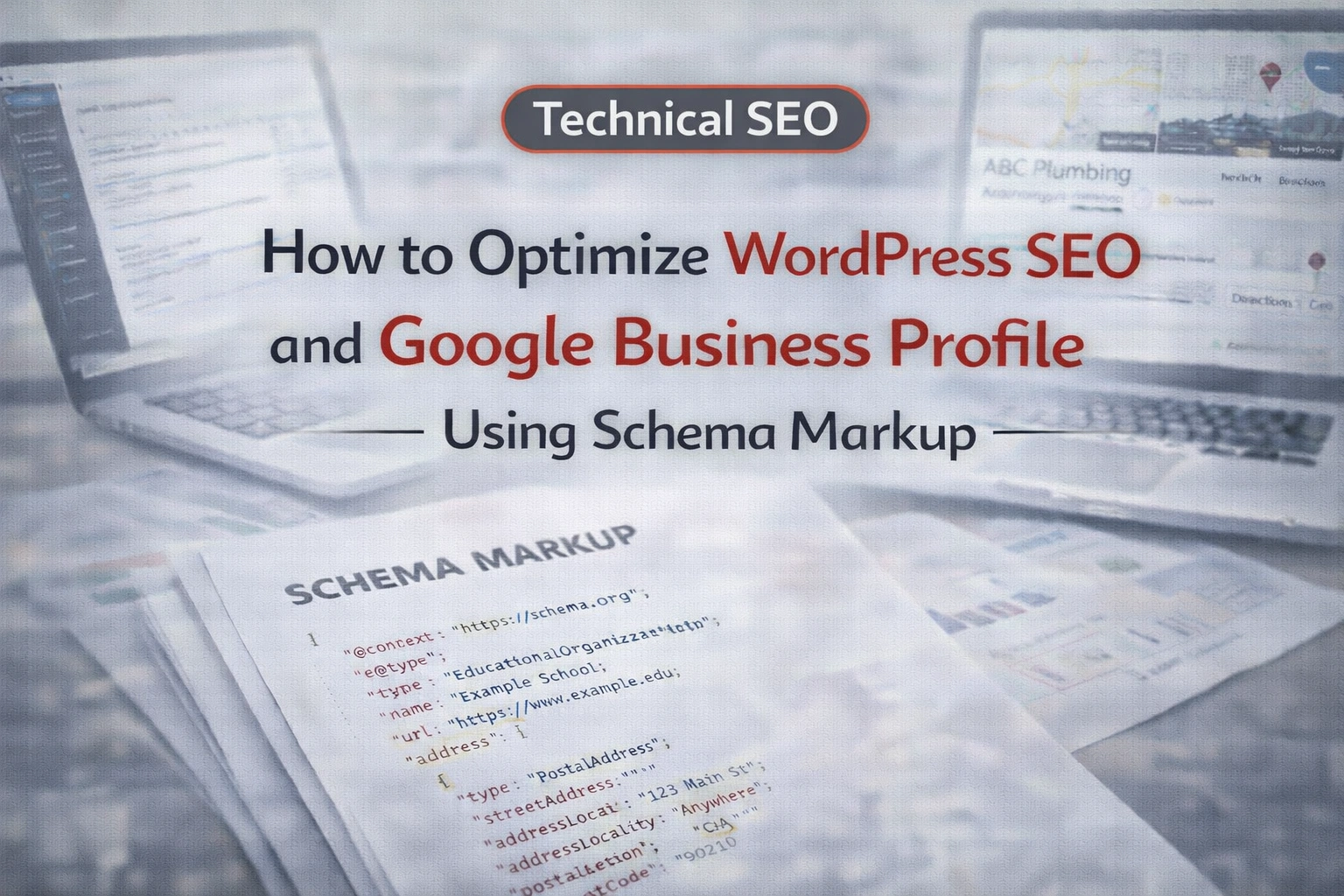
    How to Optimize WordPress SEO and Google Business Profile Using Schema Markup

    An authoritative guide to powering search visibility, rich results, local intent, and AI discovery with structured data.
    yashwant160@gmail.comBy yashwant160@gmail.comJanuary 30, 2026Updated:February 26, 2026No Comments7 Mins Read
    Share Facebook Twitter Pinterest LinkedIn Tumblr Email
    Follow Us
    Google News Flipboard Threads
    Local Business Schema 1024x683
    Share
    Facebook Twitter LinkedIn Pinterest Email

    Table of Contents

    1. Introduction: The New Search Reality
    2. What Is Schema Markup and Why Does It Matter
    3. How Search Engines Use Structured Data
    4. WordPress SEO Basics — Foundation Before Schema
    5. Choosing the Right Schema Types for WordPress
    6. Implementing Schema Markup in WordPress
    7. Schema for Local SEO & Google Business Profile
    8. Advanced Schema Strategies for Rich and AI Results
    9. Measuring Success: Metrics That Matter
    10. Common Schema Pitfalls and How to Avoid Them
    11. Future SEO Trends & Structured Data
    12. Conclusion & Next Steps
    1. Introduction: The New Search Reality

    Search engine optimization has evolved rapidly. In 2025, plain text content and generic on-page SEO are no longer enough to stand out. Today’s search results are driven by structured meaning — understanding not just what words are on your page, but what they mean in semantic context. That’s where schema markup (structured data) comes in — it tells Google and other engines what your content represents, enabling rich results, entity understanding, local prominence, and voice/AI responses.

    Schema markup is no longer optional. Widespread adoption among small and enterprise websites shows it’s becoming a standard baseline for competitive visibility.

    1. What Is Schema Markup and Why Does It Matter

    At its core, schema markup is structured data that uses a common vocabulary (Schema.org) to label entities on your site — like articles, products, events, business details, and more — in a machine-readable format. When implemented correctly, schema helps search engines understand semantic relationships instead of guessing from unstructured content.

    Why Schema Matters for SEO

    • Enhanced SERP features: Rich snippets, stars, FAQ rich blocks, breadcrumbs, and local packs.
    • Higher click-through rates: Studies show pages with schema markup often experience significantly higher CTRs — sometimes 20–40% more than plain listings.
    • Local visibility: LocalBusiness schema helps power Google Maps and Local Pack appearances.
    • AI & Generative Search: AI search results increasingly rely on structured context to generate accurate summaries — schema helps signal that context effectively.
    1. How Search Engines Use Structured Data

    Search engines use structured data to:

    • Determine exact meanings (e.g., “this is a phone number”, “this is a review rating”).
    • Build entity graphs — connecting people, businesses, products, services.
    • Populate rich and AI-assisted search experiences like knowledge panels and AI overviews.
    • Improve indexing accuracy for voice and conversational search results.

    Unlike traditional text parsing, schema data bridges the gap between plain content and machine intent.

    1. WordPress SEO Basics — Foundation Before Schema

    Before adding schema, your WordPress SEO fundamentals should be in place:

    SEO Essentials

    • SEO plugins: Install and configure plugins like Yoast SEO, Rank Math, or All In One SEO to handle essentials like titles, meta descriptions, and sitemaps.
    • Permalinks: Use search-friendly URLs (e.g., domain.com/post-name).
    • Site speed: Optimize performance (caching, CDN, compressed images) to improve rankings and user experience.
    • Mobile performance: Ensure responsive design — Google prioritizes mobile-friendly sites.

    Only then should you layer on structured data, because schema thrives best on clean, crawlable, contextually rich pages.

    1. Choosing the Right Schema Types for WordPress

    Schema types vary depending on content and business goals. Below are some of the highest-impact types for WordPress SEO and local presence:

    Core Schema Types for WordPress

    1. Article / BlogPosting – For blog content.
    2. BreadcrumbList – Helps Google show navigational paths.
    3. Organization / Website – Branding and site identity.
    4. FAQ / QAPage – Ideal for FAQ sections.
    5. LocalBusiness – Critical for local companies.

    Local SEO & Business Presence

    • LocalBusiness schema includes critical data points like address, phone number, operating hours, and geo-coordinates — these details feed directly into Google’s local index and can trigger knowledge panels and map results.
    1. Implementing Schema Markup in WordPress

    There are three primary methods for adding schema to WordPress:

    1. A) Use SEO Plugins

    Plugins automate schema injection without coding:

    • Yoast SEO: Adds basic schema types automatically (Article, WebPage, Organization).
    • Rank Math: Offers visual schema builders with more control.
    • Schema & Structured Data for WP: Advanced rule-based structured data.

    Pros: Easy, low technical requirements
    Cons: Limited customization without paid extensions

    1. B) Manual JSON-LD Implementation

    Add JSON-LD schema directly:

    <script type=”application/ld+json”>

    {

    “@context”: “https://schema.org”,

    “@type”: “BlogPosting”,

    “headline”: “Optimize WordPress SEO with Schema”,

    “description”: “A comprehensive guide to SEO and structured data in WordPress.”,

    “author”: {

    “@type”: “Person”,

    “name”: “Your Name”

    },

    “publisher”: {

    “@type”: “Organization”,

    “name”: “Your Brand”,

    “logo”: {

    “@type”: “ImageObject”,

    “url”: “https://example.com/logo.png”

    }

    },

    “datePublished”: “2025-01-15”

    }

    </script>

    Pros: Complete control
    Cons: Requires technical knowledge

    1. C) Schema Generators & Tools

    Online tools (e.g., Schema.dev, Dentsu Schema Generator) let you build JSON-LD visually and export it for WordPress.

    Validation

    Once added:

    1. Use Google’s Rich Results Test to check the eligibility of your structured data.
    2. Use Schema Markup Validator to detect errors.

    Valid markup is essential — even small syntax mistakes can block your schema from working.

    1. Schema for Local SEO & Google Business Profile

    Structured data plays a powerful role in local visibility — especially when used alongside your Google Business Profile (GBP).

    LocalBusiness Schema

    LocalBusiness schema conveys:

    • Name
    • Physical address
    • Phone number
    • Operating hours
    • Reviews
    • Service areas

    This data complements your Google Business Profile and reinforces trust signals to search engines.

    Example: LocalBusiness JSON-LD

    <script type=”application/ld+json”>

    {

    “@context”: “https://schema.org”,

    “@type”: “LocalBusiness”,

    “name”: “Your Business Name”,

    “address”: {

    “@type”: “PostalAddress”,

    “streetAddress”: “123 Main St”,

    “addressLocality”: “City”,

    “addressRegion”: “State”,

    “postalCode”: “ZIP”,

    “addressCountry”: “Country”

    },

    “telephone”: “+1-555-123-4567”,

    “openingHours”: “Mo-Fr 09:00-18:00”

    }

    </script>

    Why It Works

    Google uses structured data to confirm and augment data from GBP — improving your odds of:

    • Appearing in the Local Pack
    • Triggering knowledge panels
    • Ranking for “near me” queries
    • Feeding voice search results

    Local SEO success is driven by accuracy and consistency — your schema must match everything in your GBP listing and other directories.

    1. Advanced Schema Strategies for Rich and AI Results

    While basic schemas help, layered schema combinations can unlock richer features:

    FAQ Schema

    For page sections with commonly asked Q&A — ideal for blogs and service pages.

    Review & AggregateRating Schema

    Show reviews and average ratings directly in search results.

    BreadcrumbList Schema

    Improves site hierarchy visibility.

    Product & Offer Schema

    For e-commerce sites — adds price, availability, and offers.

    AI Search & Semantic Entities

    As generative AI search grows, schema markup becomes a signal of entity structure — improving the chances your content sources appear in AI answer boxes and summaries.

    1. Measuring Success: Metrics That Matter

    To understand if your schema implementation is working:

    Search Console Structured Data Reports

    Google Search Console shows:

    • Errors
    • Rich result impressions
    • Click-throughs

    Performance Metrics

    • CTR changes: Pages with schema often show higher CTRs.
    • Rich result impressions
    • Local pack visibility
    • Organic ranking improvements

    Schema doesn’t directly raise rankings, but by enhancing presentation and interpretation, it indirectly boosts clicks and visibility.

    1. Common Schema Pitfalls and How to Avoid Them

    Avoid mistakes like:

    • Marking up non-visible or irrelevant content
    • Using incorrect schema types
    • Duplicate or conflicting schema blocks
    • Not validating after deployment

    Always test and review the schema as part of your QA workflow.

    1. Future SEO Trends & Structured Data

    Looking forward:

    • AI-driven search will rely increasingly on structured data for entity understanding.
    • Voice and conversational search will favor rich, semantic results.
    • Entity SEO will grow as search engines map relationships between entities (people, places, products).

    Schema will continue to be a pillar of advanced SEO strategy.

    1. Conclusion & Next Steps

    Optimizing your WordPress SEO and Google Business Profile with schema markup elevates your visibility in search engines, improves CTR, and primes your site for rich and AI-driven search experiences. Start with fundamental SEO hygiene, choose the right schema types, implement them carefully, and measure impact with data.

    Actionable next steps:

    • Audit your current schema with validation tools.
    • Use SEO plugins or JSON-LD for implementation.
    • Sync the LocalBusiness schema with your GBP details.
    • Layer advanced schema types for FAQs, reviews, and rich results.

    Structured data isn’t future tech — it’s a modern SEO necessity.

    Share. Facebook Twitter Pinterest LinkedIn Tumblr Email
    yashwant160@gmail.com
    • Website

    Related Posts

    XML Sitemaps at Scale: Signaling Priority, Not Forcing Indexation

    February 3, 2026

    Robots.txt at Scale: Control, Risk, and the Limits of Crawl Directives

    February 3, 2026

    Monitoring, Alerting, and SEO Observability: Seeing Failures Before Traffic Drops

    February 3, 2026
    Leave A Reply Cancel Reply

    Don't Miss

    Personal Branding Without the Cringe: Building Professional Credibility That Actually Works

    yashwant160@gmail.comFebruary 6, 2026

    Personal branding has a reputation problem. Too often, it’s confused with self-promotion, performative posting, or…

    Career Resilience: How to Build a Job That Survives Layoffs, AI, and Market Shifts

    February 6, 2026

    From Individual Contributor to Leader: The Career Shift Most People Get Wrong

    February 6, 2026

    The Non-Linear Career: Why the Best Careers No Longer Follow a Straight Path

    February 6, 2026
    Stay In Touch
    • Facebook
    • Twitter
    • Pinterest
    • Instagram
    • YouTube
    • Vimeo

    Subscribe to Updates

    Get the latest creative news from SmartMag about art & design.

    About Us

    Results-driven digital professional with 15+ years of experience across Web Operations, Enterprise SEO, and large-scale digital platforms. I specialize in building, scaling, and optimizing complex websites where performance, search visibility, and operational reliability must work together—not in silos. My work sits at the intersection of strategy and execution, translating business goals into systems that teams can actually run.

    Facebook X (Twitter) Pinterest YouTube
    Our Picks

    Personal Branding Without the Cringe: Building Professional Credibility That Actually Works

    February 6, 2026

    Career Resilience: How to Build a Job That Survives Layoffs, AI, and Market Shifts

    February 6, 2026

    From Individual Contributor to Leader: The Career Shift Most People Get Wrong

    February 6, 2026
    Most Popular

    Top 15 popular link building methods you should consider before it’s too late

    March 24, 20180 Views

    Quality Score Demystified: What Actually Improves SEM Performance

    January 31, 20260 Views

    How SEO, SEM, Email, and Paid Social Should Work Together

    February 2, 20260 Views
    © 2026 All rights reserved. Y. K. Thakur.
    • Home
    • Technical SEO
    • World
    • Lifestyle
    • Buy Now

    Type above and press Enter to search. Press Esc to cancel.