
Close Menu
blog.ykthakur.com

    Subscribe to Updates

    Get the latest creative news from FooBar about art, design and business.

    What's Hot

    Personal Branding Without the Cringe: Building Professional Credibility That Actually Works

    February 6, 2026

    Career Resilience: How to Build a Job That Survives Layoffs, AI, and Market Shifts

    February 6, 2026

    From Individual Contributor to Leader: The Career Shift Most People Get Wrong

    February 6, 2026
    Facebook X (Twitter) Instagram
    blog.ykthakur.com
    • Home
    • About Me
    • Case Studies
    • Services
    • Contact Us
    Facebook X (Twitter) Instagram
    Subscribe
    • Blog
    • Search & Growth
      1. SEO
      2. Technical SEO
      3. SEM
      4. Paid Advertisements
      5. View All

      Why SEO Fails Even With the Right Tools and Data

      January 31, 2026

      How to Refresh Old Content Without Losing Rankings

      January 31, 2026

      How to Build a Topic Authority Map for SEO

      January 31, 2026

      E-E-A-T Signals Explained: What Actually Influences Trust and Rankings

      January 31, 2026

      XML Sitemaps at Scale: Signaling Priority, Not Forcing Indexation

      February 3, 2026

      Robots.txt at Scale: Control, Risk, and the Limits of Crawl Directives

      February 3, 2026

      Monitoring, Alerting, and SEO Observability: Seeing Failures Before Traffic Drops

      February 3, 2026

      Migrations, Releases, and SEO Risk: How Technical Changes Break Search at Scale

      February 3, 2026

      Scaling SEM Without Burning Budget

      January 31, 2026

      SEM vs SEO: How Paid Search Should Support Organic Growth

      January 31, 2026

      Quality Score Demystified: What Actually Improves SEM Performance

      January 31, 2026

      Brand vs Non-Brand Search: Budget Allocation Reality

      January 31, 2026

      Personal Branding Without the Cringe: Building Professional Credibility That Actually Works

      February 6, 2026

      Career Resilience: How to Build a Job That Survives Layoffs, AI, and Market Shifts

      February 6, 2026

      From Individual Contributor to Leader: The Career Shift Most People Get Wrong

      February 6, 2026

      The Non-Linear Career: Why the Best Careers No Longer Follow a Straight Path

      February 6, 2026
    • Performance & Infrastructure
      1. Website Performance
      2. Core Web Vitals
      3. Hosting Architecture
      4. Web Application Infrastructure
      5. Load Balancing
      6. View All

      Performance Drift: How Sites Get Slower Without Any One Bad Change

      February 3, 2026

      Why passing scores still hide systemic performance risk

      February 3, 2026

      Performance Monitoring Beyond Core Web Vitals

      February 3, 2026

      Personal Branding Without the Cringe: Building Professional Credibility That Actually Works

      February 6, 2026

      Career Resilience: How to Build a Job That Survives Layoffs, AI, and Market Shifts

      February 6, 2026

      From Individual Contributor to Leader: The Career Shift Most People Get Wrong

      February 6, 2026

      The Non-Linear Career: Why the Best Careers No Longer Follow a Straight Path

      February 6, 2026
    • AI & Automation
      1. AI Content Systems
      2. AI in SEO & Marketing
      3. AI Search Analysis
      4. AI-Driven SEO Workflows
      5. Generative AI Strategy
      6. View All

      AI Content Systems: How to Scale Without Losing Quality or Trust

      February 3, 2026

      AI in Marketing Is a System, Not a Toolset

      February 3, 2026

      SEO in a Zero-Click World: Designing for AI Answers and Visibility

      February 3, 2026

      AI Search Analysis: How LLMs Interpret and Surface Content

      February 3, 2026

      Using AI for Technical SEO Analysis Without Breaking Trust

      February 3, 2026

      AI-Driven SEO Workflows: What to Automate and What Not To

      February 3, 2026

      SEO in a Zero-Click World: Designing for AI Answers and Visibility

      February 3, 2026

      AI Search Analysis: How LLMs Interpret and Surface Content

      February 3, 2026

      Using AI for Technical SEO Analysis Without Breaking Trust

      February 3, 2026

      AI-Driven SEO Workflows: What to Automate and What Not To

      February 3, 2026

      Why Most AI SEO Implementations Fail

      February 3, 2026

      Human-in-the-Loop SEO: Where AI Stops and Judgment Starts

      February 3, 2026

      Personal Branding Without the Cringe: Building Professional Credibility That Actually Works

      February 6, 2026

      Career Resilience: How to Build a Job That Survives Layoffs, AI, and Market Shifts

      February 6, 2026

      From Individual Contributor to Leader: The Career Shift Most People Get Wrong

      February 6, 2026

      The Non-Linear Career: Why the Best Careers No Longer Follow a Straight Path

      February 6, 2026
    • Analytics & Intelligence
      1. GA4 Architecture
      2. Adobe Analytics
      3. View All

      GA4 vs Adobe Analytics: Choosing the Right Tool for Your Organization

      February 2, 2026

      Consent, Privacy, and Measurement: What Changes After GDPR & GA4

      February 2, 2026

      GA4 Architecture Explained: Designing Events for Real Decisions

      February 2, 2026

      GA4 vs Adobe Analytics: Choosing the Right Tool for Your Organization

      February 2, 2026

      Personal Branding Without the Cringe: Building Professional Credibility That Actually Works

      February 6, 2026

      Career Resilience: How to Build a Job That Survives Layoffs, AI, and Market Shifts

      February 6, 2026

      From Individual Contributor to Leader: The Career Shift Most People Get Wrong

      February 6, 2026

      The Non-Linear Career: Why the Best Careers No Longer Follow a Straight Path

      February 6, 2026
    • WebOps & DevOps
      1. Web Operations
      2. WebOps Roles
      3. Website Migrations & Scaling
      4. Release Management
      5. Monitoring & Alerts
      6. Performance Monitoring
      7. Deployment Automation
      8. View All

      SEO and WebOps Monitoring: Aligning Health Signals Across Systems

      February 3, 2026

      Designing Alerts for WebOps: Signal, Severity, and Actionability

      February 3, 2026

      Why Most Website Monitoring Is Too Late to Be Useful

      February 3, 2026

      Release Cadence Versus Stability: Finding the Sustainable Balance

      February 3, 2026

      Website Migrations at Scale: Why Most Fail Before the First Redirect

      February 3, 2026

      Post-Migration Reality: Why SEO and Performance Losses Persist for Months

      February 3, 2026

      Scaling Websites Without Replatforming: When Migration Is the Wrong Answer

      February 3, 2026

      Release Cadence Versus Stability: Finding the Sustainable Balance

      February 3, 2026

      Why Website Releases Break SEO Even When Nothing “Major” Changes

      February 3, 2026

      Release Management for Websites: Coordinating Risk Across Teams

      February 3, 2026

      Release Pipelines and Search Risk: Why Velocity Without Guardrails Breaks Websites

      February 3, 2026

      SEO and WebOps Monitoring: Aligning Health Signals Across Systems

      February 3, 2026

      Designing Alerts for WebOps: Signal, Severity, and Actionability

      February 3, 2026

      Why Most Website Monitoring Is Too Late to Be Useful

      February 3, 2026

      Feature Flags, Experiments, and the SEO Blast Radius

      February 3, 2026

      Performance Drift: How Sites Get Slower Without Any One Bad Change

      February 3, 2026

      Performance Monitoring Beyond Core Web Vitals

      February 3, 2026

      Designing SEO-Safe Deployment Automation

      February 3, 2026

      Deployment Automation for Websites: What to Automate and What Not To

      February 3, 2026

      Personal Branding Without the Cringe: Building Professional Credibility That Actually Works

      February 6, 2026

      Career Resilience: How to Build a Job That Survives Layoffs, AI, and Market Shifts

      February 6, 2026

      From Individual Contributor to Leader: The Career Shift Most People Get Wrong

      February 6, 2026

      The Non-Linear Career: Why the Best Careers No Longer Follow a Straight Path

      February 6, 2026
    • Project Strategy

      Personal Branding Without the Cringe: Building Professional Credibility That Actually Works

      February 6, 2026

      Career Resilience: How to Build a Job That Survives Layoffs, AI, and Market Shifts

      February 6, 2026

      From Individual Contributor to Leader: The Career Shift Most People Get Wrong

      February 6, 2026

      The Non-Linear Career: Why the Best Careers No Longer Follow a Straight Path

      February 6, 2026

      How to Stay Relevant When Roles Are Changing Faster Than Job Descriptions

      February 6, 2026
    • Web Engineering
      1. Web Development
      2. Web Designing & UX
      3. CMS & Platforms
      4. Web Application Firewall
      5. View All

      Personal Branding Without the Cringe: Building Professional Credibility That Actually Works

      February 6, 2026

      Career Resilience: How to Build a Job That Survives Layoffs, AI, and Market Shifts

      February 6, 2026

      From Individual Contributor to Leader: The Career Shift Most People Get Wrong

      February 6, 2026

      The Non-Linear Career: Why the Best Careers No Longer Follow a Straight Path

      February 6, 2026
    blog.ykthakur.com
    Home»SEO»Content SEO»How to Build a Topic Authority Map for SEO
    Content SEO

    How to Build a Topic Authority Map for SEO

    yashwant160@gmail.comBy yashwant160@gmail.comJanuary 31, 2026Updated:January 31, 2026No Comments5 Mins Read
    Share Facebook Twitter Pinterest LinkedIn Tumblr Email
    Follow Us
    Google News Flipboard Threads
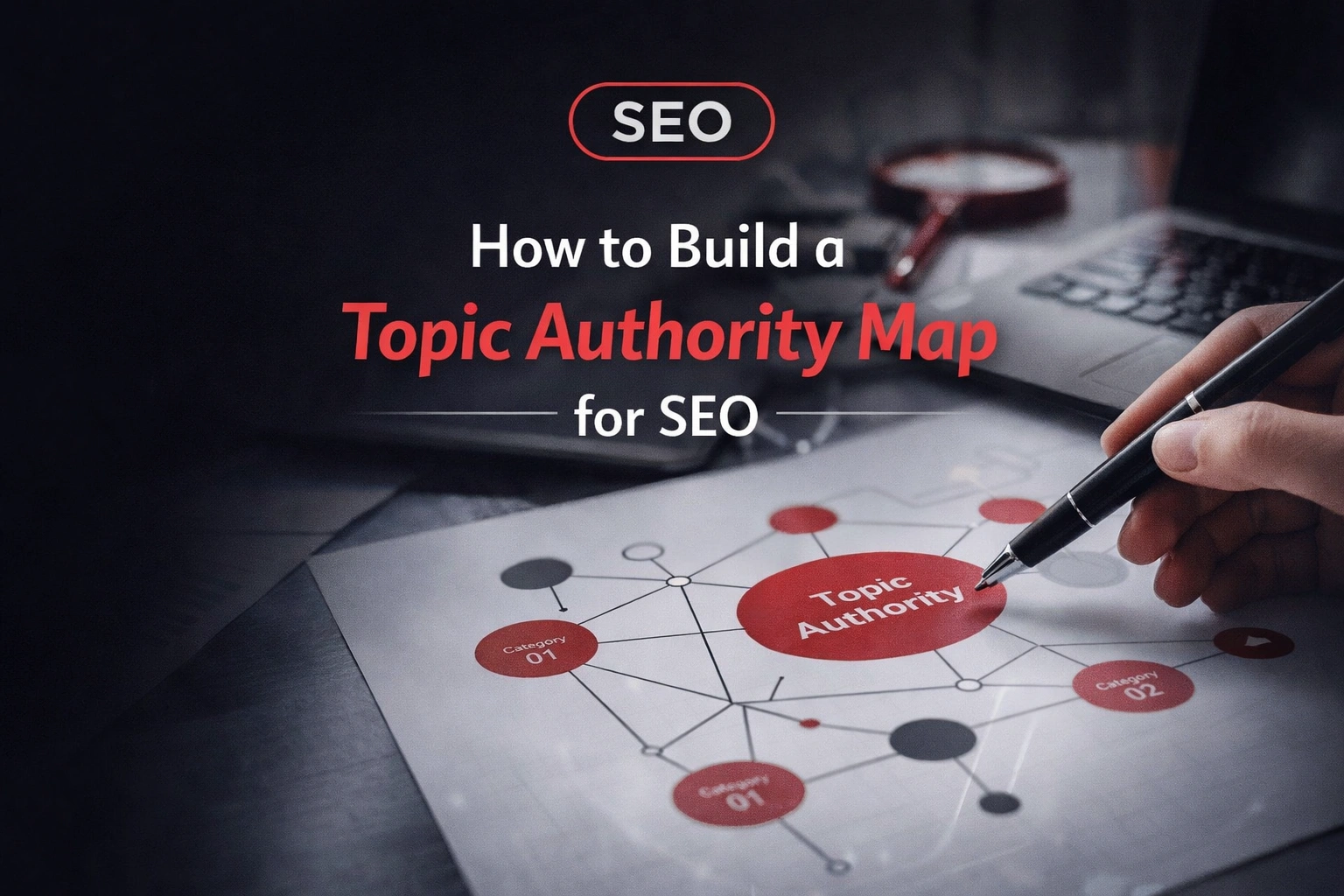
    Topic Authority Map 1024x683
    Share
    Facebook Twitter LinkedIn Pinterest Email

    Introduction

    Most websites don’t fail at SEO because their content is bad—they fail because their content is unstructured. Articles are published in isolation, topics overlap, and there is no clear signal that tells search engines what the site is actually authoritative about. In 2026, search engines reward topical clarity, not content volume. Without a topic authority map, even strong content competes against itself.

    This article explains how to build a topic authority map for SEO, why it works in modern search systems, and how to apply it practically—without overengineering or rewriting your entire site.


    What a Topic Authority Map Really Is

    A topic authority map is not:

    • A keyword list
    • A content calendar
    • A sitemap

    It is a strategic blueprint that defines:

    • What topics do you own
    • How those topics break down into subtopics
    • Which pages support which ideas
    • How authority flows internally

    In simple terms, it answers one question clearly:

    “If Google had to describe what this site specializes in, would the answer be obvious?”


    Why Topic Authority Beats Individual Rankings

    Search engines no longer rank pages in isolation. They evaluate:

    • Topic coverage
    • Depth of explanation
    • Consistency across related content
    • Internal relationships between pages

    A topic authority map helps search engines:

    • Understand your site faster
    • Trust your content more
    • Predict future quality

    This is why sites with fewer pages—but stronger structure—often outperform larger sites.


    The Core Components of a Topic Authority Map

    Every effective authority map has four layers.

    1. Pillar Topic (Ownership Layer)

    This is the primary topic you want to be known for.

    Examples:

    • SEO
    • Technical SEO
    • Website Migrations

    Each pillar:

    • Gets a dedicated pillar page
    • Defines the scope of the topic
    • Links to all supporting categories


    1. Category Topics (Segmentation Layer)

    Categories break the pillar into distinct sub-disciplines.

    For SEO, this might include:

    • On-page SEO
    • Technical SEO
    • Content SEO
    • Local SEO

    Categories clarify:

    • Intent differences
    • Responsibility boundaries
    • Content expectations


    1. Cluster Articles (Depth Layer)

    Cluster articles answer specific problems or questions.

    Examples:

    • How to design an internal linking strategy
    • How the crawl budget works
    • How to refresh old content safely

    Clusters are where:

    • Rankings are earned
    • Long-tail traffic accumulates
    • Expertise is demonstrated


    1. Internal Linking Rules (Authority Flow Layer)

    This layer defines:

    • Who links to whom
    • Which pages are emphasized
    • How authority is distributed

    Without rules, links become noise.


    Step-by-Step: Building a Topic Authority Map (Practical)

    Step 1: Define What You Actually Want to Own

    Start with business reality, not keyword volume.

    Ask:

    • What topics do we genuinely have expertise in?
    • What problems do we solve repeatedly?
    • What topics support revenue or authority goals?

    Avoid aspirational topics you can’t support long-term.


    Step 2: Identify Non-Overlapping Subtopics

    Each category must:

    • Be clearly distinct
    • Has its own intent
    • Support multiple cluster articles

    Bad example

    • SEO
    • Technical SEO
    • Advanced SEO

    These overlap and confuse signals.

    Good example

    • SEO (pillar)
    • Technical SEO (category)
    • Content SEO (category)

    Clear boundaries strengthen authority.

    Step 3: Break Categories Into Problem-Based Clusters

    Clusters should be framed as problems to solve, not vague themes.

    Weak cluster topics

    • SEO tips
    • SEO best practices

    Strong cluster topics

    • How to diagnose crawl budget issues
    • Why SEO fails even with good content
    • How to align content with search intent

    Problem-based framing improves:

    • Intent alignment
    • Engagement
    • AI summarization

    Step 4: Assign URLs Intentionally

    URL structure reinforces authority mapping.

    Example: SEO topic map

    /seo/                           ← Pillar

    /seo/technical-seo/       ← Category

    /seo/technical-seo/crawl-budget-optimization/ ← Cluster

    URLs should reflect:

    • Hierarchy
    • Ownership
    • Context

    Avoid flat or random URL paths.

    Step 5: Design Internal Linking Rules

    This is where most sites fail.

    Use these non-negotiable rules:

    • Pillar pages link to all category pages
    • Category pages link to all clusters
    • Clusters link back to their category and pillar
    • Sibling clusters cross-link only when relevant

    Internal linking is architecture, not decoration.

    Real-World Example: Authority Map in Action

    Scenario

    A site publishes 50 SEO articles over two years:

    • Mixed topics
    • No pillar pages
    • Random internal links

    Result

    • Some articles rank
    • Traffic plateaus
    • Authority remains fragmented

    After implementing an authority map

    • Articles grouped under pillars
    • Clear category pages added
    • Internal links restructured

    Outcome

    • Faster indexing
    • Ranking stability
    • Improved AI visibility
    • Stronger internal authority flow

    The content didn’t change. The structure did.

    Topic Authority vs Keyword Clusters (Important Distinction)

    Keyword Clusters Topic Authority Map
    Keyword-driven Expertise-driven
    Tool-generated Strategically designed
    Often overlapping Intentionally separated
    Short-term wins Long-term authority
    Page-centric System-centric

    Keyword clusters support execution.
    Authority maps support trust.

    Common Mistakes When Building Authority Maps

    Overlapping categories: Confuses search engines and users.

    Too many pillars: Dilutes authority.

    Publishing clusters before pillars: Leaves content unsupported.

    Ignoring maintenance: Authority decays without updates.

    How AI Search Benefits From Authority Maps

    AI systems prefer content that:

    • Is clearly grouped
    • Uses consistent terminology
    • Shows predictable structure
    • Demonstrates depth across multiple pages

    Authority maps make your site:

    • Easier to summarize
    • Safer to cite
    • More reliable to surface

    This is critical for AI Overviews and conversational search.

    How Often Should You Revisit Your Authority Map?

    At minimum:

    • Review quarterly for gaps
    • Review annually for restructuring

    Trigger reviews when:

    • New services launch
    • Search behavior changes
    • Rankings plateau unexpectedly

    Authority mapping is a living system.

    Final Takeaway

    Topic authority is designed, not discovered.

    When your site:

    • Clearly defines topics
    • Structures content intentionally
    • Reinforces authority through links
    • Maintains consistency over time

    …search engines understand, trust, and reward it.

    Without a topic authority map, even excellent content fights uphill.


    Share. Facebook Twitter Pinterest LinkedIn Tumblr Email
    yashwant160@gmail.com
    • Website

    Related Posts

    How to Refresh Old Content Without Losing Rankings

    January 31, 2026

    Search Intent Mapping: Aligning Content With User and AI Expectations

    January 31, 2026
    Leave A Reply Cancel Reply

    Don't Miss

    Personal Branding Without the Cringe: Building Professional Credibility That Actually Works

    yashwant160@gmail.comFebruary 6, 2026

    Personal branding has a reputation problem. Too often, it’s confused with self-promotion, performative posting, or…

    Career Resilience: How to Build a Job That Survives Layoffs, AI, and Market Shifts

    February 6, 2026

    From Individual Contributor to Leader: The Career Shift Most People Get Wrong

    February 6, 2026

    The Non-Linear Career: Why the Best Careers No Longer Follow a Straight Path

    February 6, 2026
    Stay In Touch
    • Facebook
    • Twitter
    • Pinterest
    • Instagram
    • YouTube
    • Vimeo

    Subscribe to Updates

    Get the latest creative news from SmartMag about art & design.

    About Us

    Results-driven digital professional with 15+ years of experience across Web Operations, Enterprise SEO, and large-scale digital platforms. I specialize in building, scaling, and optimizing complex websites where performance, search visibility, and operational reliability must work together—not in silos. My work sits at the intersection of strategy and execution, translating business goals into systems that teams can actually run.

    Facebook X (Twitter) Pinterest YouTube
    Our Picks

    Personal Branding Without the Cringe: Building Professional Credibility That Actually Works

    February 6, 2026

    Career Resilience: How to Build a Job That Survives Layoffs, AI, and Market Shifts

    February 6, 2026

    From Individual Contributor to Leader: The Career Shift Most People Get Wrong

    February 6, 2026
    Most Popular

    Top 15 popular link building methods you should consider before it’s too late

    March 24, 20180 Views

    Quality Score Demystified: What Actually Improves SEM Performance

    January 31, 20260 Views

    How SEO, SEM, Email, and Paid Social Should Work Together

    February 2, 20260 Views
    © 2026 All rights reserved. Y. K. Thakur.
    • Home
    • Technical SEO
    • World
    • Lifestyle
    • Buy Now

    Type above and press Enter to search. Press Esc to cancel.