Close Menu
blog.ykthakur.com

    Subscribe to Updates

    Get the latest creative news from FooBar about art, design and business.

    What's Hot

    Personal Branding Without the Cringe: Building Professional Credibility That Actually Works

    February 6, 2026

    Career Resilience: How to Build a Job That Survives Layoffs, AI, and Market Shifts

    February 6, 2026

    From Individual Contributor to Leader: The Career Shift Most People Get Wrong

    February 6, 2026
    Facebook X (Twitter) Instagram
    blog.ykthakur.com
    • Home
    • About Me
    • Case Studies
    • Services
    • Contact Us
    Facebook X (Twitter) Instagram
    Subscribe
    • Blog
    • Search & Growth
      1. SEO
      2. Technical SEO
      3. SEM
      4. Paid Advertisements
      5. View All

      Why SEO Fails Even With the Right Tools and Data

      January 31, 2026

      How to Refresh Old Content Without Losing Rankings

      January 31, 2026

      How to Build a Topic Authority Map for SEO

      January 31, 2026

      E-E-A-T Signals Explained: What Actually Influences Trust and Rankings

      January 31, 2026

      XML Sitemaps at Scale: Signaling Priority, Not Forcing Indexation

      February 3, 2026

      Robots.txt at Scale: Control, Risk, and the Limits of Crawl Directives

      February 3, 2026

      Monitoring, Alerting, and SEO Observability: Seeing Failures Before Traffic Drops

      February 3, 2026

      Migrations, Releases, and SEO Risk: How Technical Changes Break Search at Scale

      February 3, 2026

      Scaling SEM Without Burning Budget

      January 31, 2026

      SEM vs SEO: How Paid Search Should Support Organic Growth

      January 31, 2026

      Quality Score Demystified: What Actually Improves SEM Performance

      January 31, 2026

      Brand vs Non-Brand Search: Budget Allocation Reality

      January 31, 2026

      Personal Branding Without the Cringe: Building Professional Credibility That Actually Works

      February 6, 2026

      Career Resilience: How to Build a Job That Survives Layoffs, AI, and Market Shifts

      February 6, 2026

      From Individual Contributor to Leader: The Career Shift Most People Get Wrong

      February 6, 2026

      The Non-Linear Career: Why the Best Careers No Longer Follow a Straight Path

      February 6, 2026
    • Performance & Infrastructure
      1. Website Performance
      2. Core Web Vitals
      3. Hosting Architecture
      4. Web Application Infrastructure
      5. Load Balancing
      6. View All

      Performance Drift: How Sites Get Slower Without Any One Bad Change

      February 3, 2026

      Why passing scores still hide systemic performance risk

      February 3, 2026

      Performance Monitoring Beyond Core Web Vitals

      February 3, 2026

      Personal Branding Without the Cringe: Building Professional Credibility That Actually Works

      February 6, 2026

      Career Resilience: How to Build a Job That Survives Layoffs, AI, and Market Shifts

      February 6, 2026

      From Individual Contributor to Leader: The Career Shift Most People Get Wrong

      February 6, 2026

      The Non-Linear Career: Why the Best Careers No Longer Follow a Straight Path

      February 6, 2026
    • AI & Automation
      1. AI Content Systems
      2. AI in SEO & Marketing
      3. AI Search Analysis
      4. AI-Driven SEO Workflows
      5. Generative AI Strategy
      6. View All

      AI Content Systems: How to Scale Without Losing Quality or Trust

      February 3, 2026

      AI in Marketing Is a System, Not a Toolset

      February 3, 2026

      SEO in a Zero-Click World: Designing for AI Answers and Visibility

      February 3, 2026

      AI Search Analysis: How LLMs Interpret and Surface Content

      February 3, 2026

      Using AI for Technical SEO Analysis Without Breaking Trust

      February 3, 2026

      AI-Driven SEO Workflows: What to Automate and What Not To

      February 3, 2026

      SEO in a Zero-Click World: Designing for AI Answers and Visibility

      February 3, 2026

      AI Search Analysis: How LLMs Interpret and Surface Content

      February 3, 2026

      Using AI for Technical SEO Analysis Without Breaking Trust

      February 3, 2026

      AI-Driven SEO Workflows: What to Automate and What Not To

      February 3, 2026

      Why Most AI SEO Implementations Fail

      February 3, 2026

      Human-in-the-Loop SEO: Where AI Stops and Judgment Starts

      February 3, 2026

      Personal Branding Without the Cringe: Building Professional Credibility That Actually Works

      February 6, 2026

      Career Resilience: How to Build a Job That Survives Layoffs, AI, and Market Shifts

      February 6, 2026

      From Individual Contributor to Leader: The Career Shift Most People Get Wrong

      February 6, 2026

      The Non-Linear Career: Why the Best Careers No Longer Follow a Straight Path

      February 6, 2026
    • Analytics & Intelligence
      1. GA4 Architecture
      2. Adobe Analytics
      3. View All

      GA4 vs Adobe Analytics: Choosing the Right Tool for Your Organization

      February 2, 2026

      Consent, Privacy, and Measurement: What Changes After GDPR & GA4

      February 2, 2026

      GA4 Architecture Explained: Designing Events for Real Decisions

      February 2, 2026

      GA4 vs Adobe Analytics: Choosing the Right Tool for Your Organization

      February 2, 2026

      Personal Branding Without the Cringe: Building Professional Credibility That Actually Works

      February 6, 2026

      Career Resilience: How to Build a Job That Survives Layoffs, AI, and Market Shifts

      February 6, 2026

      From Individual Contributor to Leader: The Career Shift Most People Get Wrong

      February 6, 2026

      The Non-Linear Career: Why the Best Careers No Longer Follow a Straight Path

      February 6, 2026
    • WebOps & DevOps
      1. Web Operations
      2. WebOps Roles
      3. Website Migrations & Scaling
      4. Release Management
      5. Monitoring & Alerts
      6. Performance Monitoring
      7. Deployment Automation
      8. View All

      SEO and WebOps Monitoring: Aligning Health Signals Across Systems

      February 3, 2026

      Designing Alerts for WebOps: Signal, Severity, and Actionability

      February 3, 2026

      Why Most Website Monitoring Is Too Late to Be Useful

      February 3, 2026

      Release Cadence Versus Stability: Finding the Sustainable Balance

      February 3, 2026

      Website Migrations at Scale: Why Most Fail Before the First Redirect

      February 3, 2026

      Post-Migration Reality: Why SEO and Performance Losses Persist for Months

      February 3, 2026

      Scaling Websites Without Replatforming: When Migration Is the Wrong Answer

      February 3, 2026

      Release Cadence Versus Stability: Finding the Sustainable Balance

      February 3, 2026

      Why Website Releases Break SEO Even When Nothing “Major” Changes

      February 3, 2026

      Release Management for Websites: Coordinating Risk Across Teams

      February 3, 2026

      Release Pipelines and Search Risk: Why Velocity Without Guardrails Breaks Websites

      February 3, 2026

      SEO and WebOps Monitoring: Aligning Health Signals Across Systems

      February 3, 2026

      Designing Alerts for WebOps: Signal, Severity, and Actionability

      February 3, 2026

      Why Most Website Monitoring Is Too Late to Be Useful

      February 3, 2026

      Feature Flags, Experiments, and the SEO Blast Radius

      February 3, 2026

      Performance Drift: How Sites Get Slower Without Any One Bad Change

      February 3, 2026

      Performance Monitoring Beyond Core Web Vitals

      February 3, 2026

      Designing SEO-Safe Deployment Automation

      February 3, 2026

      Deployment Automation for Websites: What to Automate and What Not To

      February 3, 2026

      Personal Branding Without the Cringe: Building Professional Credibility That Actually Works

      February 6, 2026

      Career Resilience: How to Build a Job That Survives Layoffs, AI, and Market Shifts

      February 6, 2026

      From Individual Contributor to Leader: The Career Shift Most People Get Wrong

      February 6, 2026

      The Non-Linear Career: Why the Best Careers No Longer Follow a Straight Path

      February 6, 2026
    • Project Strategy

      Personal Branding Without the Cringe: Building Professional Credibility That Actually Works

      February 6, 2026

      Career Resilience: How to Build a Job That Survives Layoffs, AI, and Market Shifts

      February 6, 2026

      From Individual Contributor to Leader: The Career Shift Most People Get Wrong

      February 6, 2026

      The Non-Linear Career: Why the Best Careers No Longer Follow a Straight Path

      February 6, 2026

      How to Stay Relevant When Roles Are Changing Faster Than Job Descriptions

      February 6, 2026
    • Web Engineering
      1. Web Development
      2. Web Designing & UX
      3. CMS & Platforms
      4. Web Application Firewall
      5. View All

      Personal Branding Without the Cringe: Building Professional Credibility That Actually Works

      February 6, 2026

      Career Resilience: How to Build a Job That Survives Layoffs, AI, and Market Shifts

      February 6, 2026

      From Individual Contributor to Leader: The Career Shift Most People Get Wrong

      February 6, 2026

      The Non-Linear Career: Why the Best Careers No Longer Follow a Straight Path

      February 6, 2026
    blog.ykthakur.com
    Home»Project Managemant»Agile Web Development: Best Practices for Modern Teams in 2026
    Project Managemant

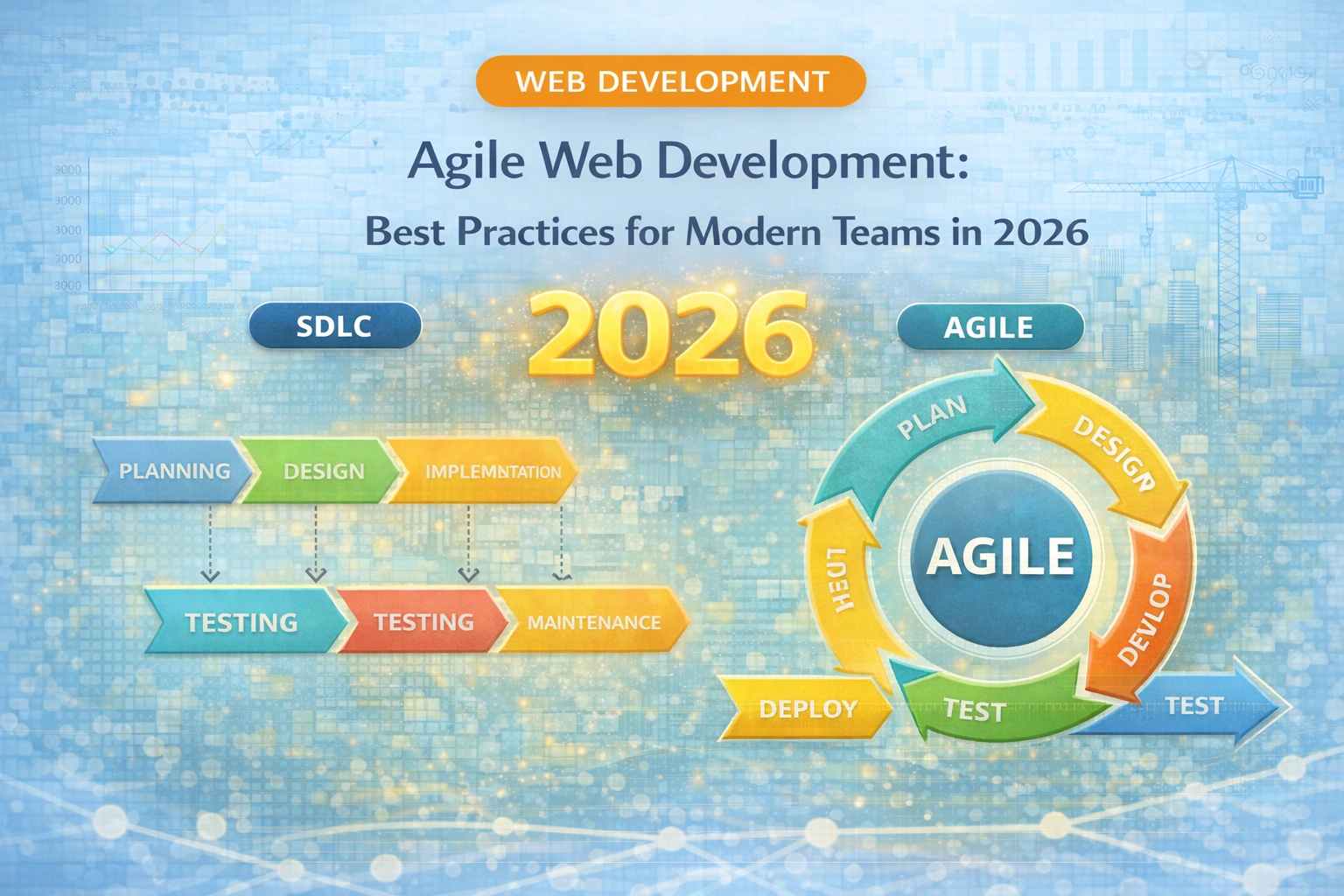
    Agile Web Development: Best Practices for Modern Teams in 2026

    yashwant160@gmail.comBy yashwant160@gmail.comFebruary 6, 2026Updated:February 27, 2026No Comments7 Mins Read
    Share Facebook Twitter Pinterest LinkedIn Tumblr Email
    Follow Us
    Google News Flipboard Threads
    Agile Web Development Best Practices For Modern Teams In 2026 1024x683
    Share
    Facebook Twitter LinkedIn Pinterest Email
    Actionable strategies, trends, tools, and workflows for web developers, product owners, and engineering managers striving for high performance in today’s fast-paced digital landscape.

    Table of Contents

    1. Introduction
    2. Why Agile Matters in Web Development
    3. Core Agile Principles for Web Teams
    4. Scrum, Kanban & Hybrid Models
    5. Collaboration & Communication Strategies
    6. Continuous Feedback and Customer Validation
    7. AI & Automation in Agile Workflows
    8. Measuring Success: Metrics That Matter
    9. Common Challenges & How to Overcome Them
    10. Modern Tools and Technologies
    11. Conclusion and Next Steps
    12. Sources

    Introduction

    Agile is more than a methodology — it’s a mindset that enables web development teams to deliver value quickly, adapt to shifting requirements, and collaborate effectively across disciplines. Originally designed for software product development, Agile has now extended into web platforms, interactive experiences, and multi-team delivery ecosystems.

    In 2026, the most successful Agile web teams combine high-velocity delivery with tight customer feedback loops, cross-team autonomy, and advanced automation — including AI-assisted planning and continuous improvement workflows. This comprehensive guide brings together the most effective practices adopted by modern teams and backed by industry trends and case evidence.

    Why Agile Matters in Web Development

    Traditional waterfall or phase-based planning rarely succeeds at web scale. Websites are not just collections of static pages — they are dynamic systems that must adapt to market signals, SEO changes, user behaviors, technical dependencies, and shifting stakeholder priorities.

    Agile allows teams to deliver in iterative increments, learn continuously, and reduce risk while building complex web experiences. In fact, studies indicate that enterprise agile transformation services will grow at nearly 20% CAGR by the end of 2026 as organizations seek flexibility and resilience.

    Web development complexity requires autonomy + alignment.

    Web projects often involve designers, front-end engineers, back-end services, testers, SEO specialists, and product owners. Agile frameworks help align these roles around common outcomes rather than isolated tasks.

    Core Agile Principles for Web Teams

    1. Work incrementally with short iterations

    Break large goals into small increments that deliver measurable value. For web teams, this could mean shipping a homepage component, a performance optimization, or a content experiment within a sprint cycle.

    Short iterations reduce risk and allow teams to validate assumptions early rather than waiting for a monolithic launch. Teams that implement short cycles see higher quality and faster problem resolution.

    2. Prioritize customer value

    Agile is centered around delivering what users need most. Before adding features or pages, assess whether the work will create a measurable impact — whether in revenue, engagement, or SEO visibility.

    3. Cross-functional collaboration

    Teams should be composed of all necessary skills — design, development, testing, analytics, and SEO — so there’s no handoff bottleneck. This mirrors what research consistently shows: agile excellence depends on small, empowered teams aligned around shared outcomes. :contentReference[oaicite:4]{index=4}

    4. Inspect and adapt

    Agile is about learning. After each sprint or delivery, teams should hold retrospectives to identify bottlenecks, experiment with improvements, and refine processes. These regular reflection points fuel continuous improvement and keep teams responsive to change.

    Scrum, Kanban & Hybrid Models

    Scrum for structured delivery

    Scrum is the most adopted Agile framework for web development. It breaks work into fixed iterations called sprints, typically 1–4 weeks, each ending with a review and retrospective. Scrum requires defined roles — Scrum Master, Product Owner, and the Delivery Team — and regular ceremonies to plan, execute, and reflect.

    Kanban for continuous workflow

    Kanban does not use fixed sprints, but instead visualizes workflow on a board and emphasizes limiting work in progress (WIP) to improve flow. Web teams use Kanban effectively for ongoing ops work, testing releases, and reactive tasks like bug fixes.

    Hybrid models for real-world teams

    Modern teams adapt frameworks based on needs. Hybrid Agile — combining Scrum structure with Kanban flexibility — is increasingly common. AI reports predict that hybrid workflows blending Agile with traditional planning or Lean principles will become the default approaches in 2026.

    Collaboration & Communication Strategies

    Define team communication norms.s

    Agile workflows depend on effective communication. Establish guidelines for daily standups, async updates, cross-team handoffs, and escalation paths. For remote teams, this requires explicit documentation and communication SLAs (e.g., response expectations for chats, tickets, and email).

    Shared work artifacts

    Use centralized artifact repositories — shared issue boards, design systems, documentation portals — so everyone reads from the same source of truth. This reduces miscommunication and duplicate work, especially important for globally distributed teams.

    Continuous Feedback and Customer Validation

    Short feedback loops drive quality.

    Build feedback loops into every cycle. This includes user testing, QA smoke reports, analytics checks, SEO impact assessments, and stakeholder reviews. Put simply: don’t wait until release to learn what works.

    Automate feedback where possible

    Leverage automated tools — performance audits, SEO crawlers, UI tests — to deliver continuous signals about system health. These automated feedback sources free human teams to focus on edge cases and strategic decisions.

    AI & Automation in Agile Workflows

    AI-assisted planning and risk forecasting

    AI tools are rapidly evolving to support backlog prioritization, sprint forecasting, and risk insights. In 2026, predictive AI will suggest capacity adjustments and flag potential blocker signals based on historical data and work patterns.

    Automated delivery pipelines

    Teams use CI/CD systems integrated with automated testing and deployment scripts to ensure consistent delivery quality. Advanced automation can run security scans, accessibility validations, and build rollbacks without human intervention, speeding delivery while lowering risk.

    Guardrails and human oversight

    Despite automation, teams should retain human reviews for governance, legal compliance, and strategic prioritization. AI is a co-pilot, not a replacement for domain expertise.

    Measuring Success: Metrics That Matter

    Focus on outcomes, not just output. Effective metrics include:

    • Cycle time: How long workto gos from concept to delivery
    • Lead time: The total time from request intake to delivery
    • Velocity and throughput: Amount of value delivered per period
    • User engagement: Impact of features on adoption, conversion, retention
    • Quality indicators: Defect rates, rollback frequency, automated test coverage

    These metrics help teams balance speed, quality, and business impact, rather than just counting tickets closed.

    Common Challenges & How to Overcome Them

    Scope diffusion

    Prevent scope creep by tightly defining acceptance criteria and linking backlog items to measurable business outcomes. Review scope changes collaboratively before expanding commitments.

    Estimating reality

    Estimates are notoriously hard. Use relative sizing, historical velocity, and risk buffers to make realistic commitments. Re-estimate as more information becomes available.

    Cultural resistance

    Agile values require cultural buy-in. Invest in training, cross-team mentorship, and open reflections to build trust and shared purpose.

    Modern Tools and Technologies

    Successful Agile teams use a balanced stack that supports planning, collaboration, delivery, and feedback. Typical tools include:

    • Planning & Backlog: Jira, Asana, ClickUp
    • Documentation & Knowledge Management: Confluence, Notion, GitHub Wikis
    • CI/CD & Automation: GitHub Actions, GitLab CI, Jenkins
    • Testing & QA: Selenium, Cypress, automated performance audits
    • Communication: Slack, Microsoft Teams
    • Monitoring & Analytics: Datadog, New Relic, GA4

    Conclusion and Next Steps

    Agile web development in 2026 blends traditional Agile values with emerging trends like AI-assisted planning, hybrid frameworks, and continuous feedback systems. The teams that thrive will be those that emphasize clear outcomes, automation without losing human judgment, and iterative improvement grounded in real user value.

    By adopting the best practices outlined in this guide — from effective collaboration and metrics to hybrid frameworks and automated workflows — modern teams can build resilient, adaptable processes that deliver meaningful results.

    Sources

    • Agile Best Practices & Trends for 2026 (Simplilearn).
    • Top Agile Trends for 2026 (KnowledgeHut).}
    • Project Management Tool Trends (GoodDay).
    Share. Facebook Twitter Pinterest LinkedIn Tumblr Email
    yashwant160@gmail.com
    • Website

    Related Posts

    Managing Remote Digital Teams: Best Practices for High-Performance, Async-First Organizations (2026)

    February 6, 2026

    The Complete Guide to Website Project Management in 2026

    February 6, 2026

    Agile Web Projects at Scale: How Modern Teams Deliver Websites Without Chaos

    February 6, 2026
    Leave A Reply Cancel Reply

    Don't Miss

    Personal Branding Without the Cringe: Building Professional Credibility That Actually Works

    yashwant160@gmail.comFebruary 6, 2026

    Personal branding has a reputation problem. Too often, it’s confused with self-promotion, performative posting, or…

    Career Resilience: How to Build a Job That Survives Layoffs, AI, and Market Shifts

    February 6, 2026

    From Individual Contributor to Leader: The Career Shift Most People Get Wrong

    February 6, 2026

    The Non-Linear Career: Why the Best Careers No Longer Follow a Straight Path

    February 6, 2026
    Stay In Touch
    • Facebook
    • Twitter
    • Pinterest
    • Instagram
    • YouTube
    • Vimeo

    Subscribe to Updates

    Get the latest creative news from SmartMag about art & design.

    About Us

    Results-driven digital professional with 15+ years of experience across Web Operations, Enterprise SEO, and large-scale digital platforms. I specialize in building, scaling, and optimizing complex websites where performance, search visibility, and operational reliability must work together—not in silos. My work sits at the intersection of strategy and execution, translating business goals into systems that teams can actually run.

    Facebook X (Twitter) Pinterest YouTube
    Our Picks

    Personal Branding Without the Cringe: Building Professional Credibility That Actually Works

    February 6, 2026

    Career Resilience: How to Build a Job That Survives Layoffs, AI, and Market Shifts

    February 6, 2026

    From Individual Contributor to Leader: The Career Shift Most People Get Wrong

    February 6, 2026
    Most Popular

    Top 15 popular link building methods you should consider before it’s too late

    March 24, 20180 Views

    Quality Score Demystified: What Actually Improves SEM Performance

    January 31, 20260 Views

    How SEO, SEM, Email, and Paid Social Should Work Together

    February 2, 20260 Views
    © 2026 All rights reserved. Y. K. Thakur.
    • Home
    • Technical SEO
    • World
    • Lifestyle
    • Buy Now

    Type above and press Enter to search. Press Esc to cancel.