

What Is Deep Work?
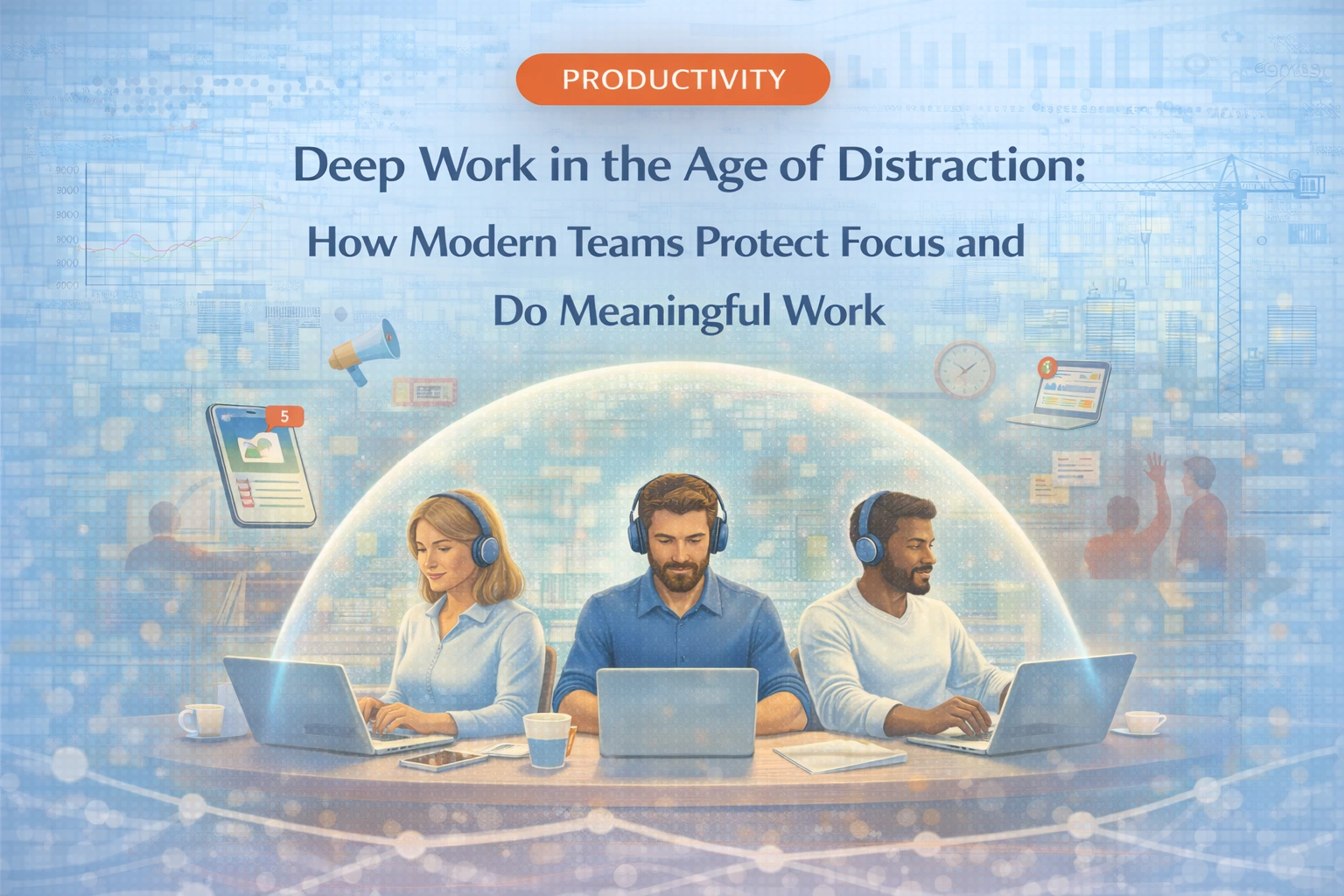
Deep work refers to focused, uninterrupted effort on cognitively demanding tasks that create long-term value. This includes activities like writing, coding, designing systems, analyzing data, or solving complex problems.
Unlike shallow work — emails, meetings, status updates — deep work produces outcomes that compound over time.
Why Deep Work Matters More Than Ever
Modern work environments are optimized for responsiveness, not effectiveness. Notifications, chat tools, and open calendars fragment attention and reduce the quality of thinking.
As automation and AI handle routine tasks, the remaining human advantage lies in creativity, judgment, and complex reasoning — all of which require deep work.
The Shallow Work Trap
Shallow work feels productive because it is visible and reactive. Unfortunately, it often produces little long-term value.
Common shallow work patterns include:
- Excessive meetings without decisions
- Always-on chat responsiveness
- Busywork disguised as collaboration
Teams trapped in shallow work cycles struggle to make meaningful progress despite high activity levels.
The Science Behind Focus
Cognitive research shows that attention residue lingers after task switching. Each interruption degrades performance and increases mental fatigue.
On average, it can take more than 20 minutes to fully regain focus after a disruption. Multiply this across a day, and true productivity collapses.
Deep Work vs Busyness Culture
Busyness is often rewarded because it is easy to measure. Deep work is harder to observe but far more valuable.
Healthy organizations shift incentives from:
- Hours worked → outcomes delivered
- Messages sent → problems solved
- Meetings attended → decisions made
Designing Deep Work for Teams
Deep work is not just an individual habit — it is a team design problem.
Teams that enable deep work:
- Limit work in progress
- Reduce unnecessary meetings
- Protect maker time
- Document decisions to avoid rework
Deep Work in Remote & Hybrid Teams
Remote work can either amplify distractions or dramatically improve focus — depending on how it is structured.
Remote teams that succeed at deep work:
- Adopt async-first communication
- Set clear response-time expectations
- Encourage focus blocks on calendars
- Replace meetings with written updates
Rituals and Systems That Enable Deep Work
Deep work thrives on rituals. Examples include:
- Daily focus windows
- Weekly planning sessions
- No-meeting mornings
- End-of-day shutdown routines
These systems reduce decision fatigue and make focus the default.
The Leadership Role in Protecting Focus
Leaders set the tone. When leaders over-schedule meetings, demand instant replies, or celebrate busyness, deep work disappears.
Strong leaders:
- Model focus-first behavior
- Challenge unnecessary urgency
- Reward meaningful outcomes
A Practical Deep Work Framework
- Identify your highest-impact work
- Block uninterrupted time for it
- Remove distractions aggressively
- Batch shallow tasks
- Review and refine weekly
Deep work is not about working longer — it’s about working with intention.
Final takeaway: In an economy optimized for distraction, the ability to focus deeply is a competitive advantage — for individuals and teams alike.
