
The Problem With Hustle Culture
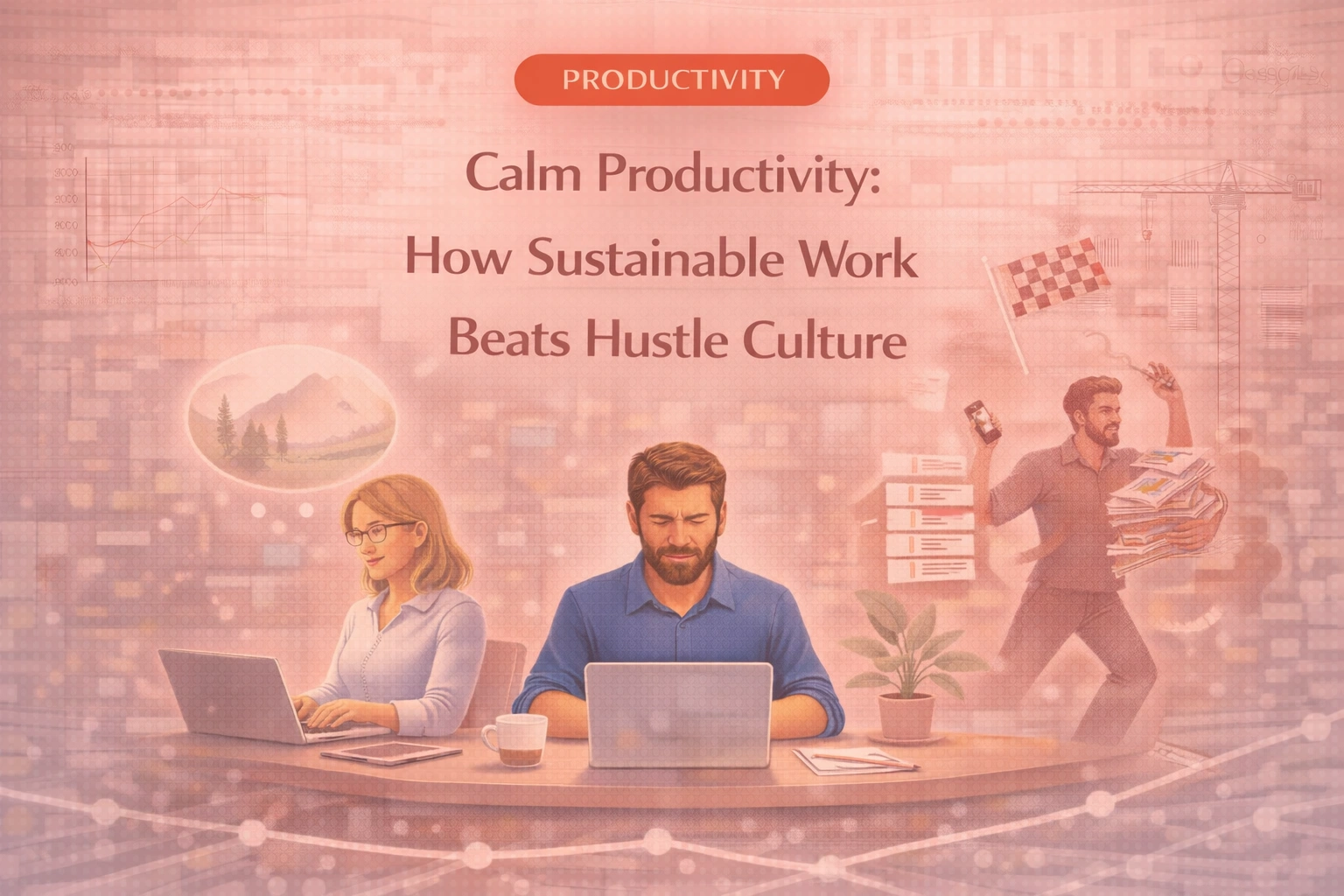
Hustle culture glorifies long hours, constant availability, and relentless output. It frames exhaustion as commitment and busyness as success.
While this approach can produce short bursts of progress, it consistently fails over time. Teams burn out, mistakes increase, and institutional knowledge erodes as people leave.
In knowledge work, intensity without recovery is not dedication—it is mismanagement.
What Calm Productivity Really Means
Calm productivity is not about working less. It is about working deliberately.
It prioritizes:
- Focused effort over constant motion
- Clear priorities over reactive urgency
- Sustainable pace over heroic sprints
The goal is consistent, high-quality output that can be maintained for years—not weeks.
Burnout Is a Systems Failure
Burnout is often framed as an individual resilience issue. In reality, it is almost always a systems problem.
Common systemic causes include:
- Chronic overcommitment
- Unclear priorities
- Constant interruptions
- Lack of recovery time
Fixing burnout requires redesigning workflows—not encouraging people to “push through.”
Energy Management vs Time Management
Time is fixed. Energy is variable.
Calm productivity recognizes that cognitive energy fluctuates throughout the day and week. High-impact work should align with peak energy, not arbitrary schedules.
High-performing individuals and teams:
- Schedule deep work during peak energy windows
- Batch shallow tasks during low-energy periods
- Respect recovery and rest
Why Quality Outperforms Speed
Speed is seductive. Quality is durable.
Rushed work often creates hidden costs: rework, bugs, misalignment, and customer frustration. Calm teams move slightly slower upfront—but dramatically faster over time.
Quality reduces friction, accelerates learning, and builds trust.
Designing Sustainable Work Rhythms
Calm productivity relies on predictable rhythms.
Examples of healthy rhythms include:
- Weekly planning and review cycles
- No-meeting focus blocks
- Clear start and stop times
- Regular retrospectives focused on workload balance
Rhythms reduce decision fatigue and create psychological safety.
Calm Productivity in Remote & Hybrid Teams
Remote work amplifies both calm and chaos.
Without intentional design, remote teams drift into always-on behavior. Calm remote teams counter this with:
- Async-first communication
- Clear response-time expectations
- Protected focus hours
- Explicit norms around availability
Remote teams that embrace calm productivity often report higher satisfaction and better output.
Leadership’s Role in Sustainable Performance
Leaders shape productivity culture—intentionally or not.
When leaders reward overwork, teams follow. When leaders protect focus and recovery, teams thrive.
Effective leaders:
- Model healthy boundaries
- Set realistic expectations
- Reward outcomes, not exhaustion
A Practical Calm Productivity Framework
- Limit active priorities
- Design focus-first schedules
- Reduce unnecessary urgency
- Build recovery into workflows
- Review workload sustainability regularly
Calm productivity is a discipline—and a competitive advantage.
The Long-Term Advantage of Calm Teams
Calm teams outperform hustle-driven teams over time.
They:
- Retain talent
- Produce higher-quality work
- Adapt more effectively to change
In a volatile, complex world, sustainability is strength.
Final takeaway: The future of productivity belongs to teams that move calmly, deliberately, and consistently—not those that burn brightest and fade fastest.
