Close Menu
blog.ykthakur.com

    Subscribe to Updates

    Get the latest creative news from FooBar about art, design and business.

    What's Hot

    Personal Branding Without the Cringe: Building Professional Credibility That Actually Works

    February 6, 2026

    Career Resilience: How to Build a Job That Survives Layoffs, AI, and Market Shifts

    February 6, 2026

    From Individual Contributor to Leader: The Career Shift Most People Get Wrong

    February 6, 2026
    Facebook X (Twitter) Instagram
    blog.ykthakur.com
    • Home
    • About Me
    • Case Studies
    • Services
    • Contact Us
    Facebook X (Twitter) Instagram
    Subscribe
    • Blog
    • Search & Growth
      1. SEO
      2. Technical SEO
      3. SEM
      4. Paid Advertisements
      5. View All

      Why SEO Fails Even With the Right Tools and Data

      January 31, 2026

      How to Refresh Old Content Without Losing Rankings

      January 31, 2026

      How to Build a Topic Authority Map for SEO

      January 31, 2026

      E-E-A-T Signals Explained: What Actually Influences Trust and Rankings

      January 31, 2026

      XML Sitemaps at Scale: Signaling Priority, Not Forcing Indexation

      February 3, 2026

      Robots.txt at Scale: Control, Risk, and the Limits of Crawl Directives

      February 3, 2026

      Monitoring, Alerting, and SEO Observability: Seeing Failures Before Traffic Drops

      February 3, 2026

      Migrations, Releases, and SEO Risk: How Technical Changes Break Search at Scale

      February 3, 2026

      Scaling SEM Without Burning Budget

      January 31, 2026

      SEM vs SEO: How Paid Search Should Support Organic Growth

      January 31, 2026

      Quality Score Demystified: What Actually Improves SEM Performance

      January 31, 2026

      Brand vs Non-Brand Search: Budget Allocation Reality

      January 31, 2026

      Personal Branding Without the Cringe: Building Professional Credibility That Actually Works

      February 6, 2026

      Career Resilience: How to Build a Job That Survives Layoffs, AI, and Market Shifts

      February 6, 2026

      From Individual Contributor to Leader: The Career Shift Most People Get Wrong

      February 6, 2026

      The Non-Linear Career: Why the Best Careers No Longer Follow a Straight Path

      February 6, 2026
    • Performance & Infrastructure
      1. Website Performance
      2. Core Web Vitals
      3. Hosting Architecture
      4. Web Application Infrastructure
      5. Load Balancing
      6. View All

      Performance Drift: How Sites Get Slower Without Any One Bad Change

      February 3, 2026

      Why passing scores still hide systemic performance risk

      February 3, 2026

      Performance Monitoring Beyond Core Web Vitals

      February 3, 2026

      Personal Branding Without the Cringe: Building Professional Credibility That Actually Works

      February 6, 2026

      Career Resilience: How to Build a Job That Survives Layoffs, AI, and Market Shifts

      February 6, 2026

      From Individual Contributor to Leader: The Career Shift Most People Get Wrong

      February 6, 2026

      The Non-Linear Career: Why the Best Careers No Longer Follow a Straight Path

      February 6, 2026
    • AI & Automation
      1. AI Content Systems
      2. AI in SEO & Marketing
      3. AI Search Analysis
      4. AI-Driven SEO Workflows
      5. Generative AI Strategy
      6. View All

      AI Content Systems: How to Scale Without Losing Quality or Trust

      February 3, 2026

      AI in Marketing Is a System, Not a Toolset

      February 3, 2026

      SEO in a Zero-Click World: Designing for AI Answers and Visibility

      February 3, 2026

      AI Search Analysis: How LLMs Interpret and Surface Content

      February 3, 2026

      Using AI for Technical SEO Analysis Without Breaking Trust

      February 3, 2026

      AI-Driven SEO Workflows: What to Automate and What Not To

      February 3, 2026

      SEO in a Zero-Click World: Designing for AI Answers and Visibility

      February 3, 2026

      AI Search Analysis: How LLMs Interpret and Surface Content

      February 3, 2026

      Using AI for Technical SEO Analysis Without Breaking Trust

      February 3, 2026

      AI-Driven SEO Workflows: What to Automate and What Not To

      February 3, 2026

      Why Most AI SEO Implementations Fail

      February 3, 2026

      Human-in-the-Loop SEO: Where AI Stops and Judgment Starts

      February 3, 2026

      Personal Branding Without the Cringe: Building Professional Credibility That Actually Works

      February 6, 2026

      Career Resilience: How to Build a Job That Survives Layoffs, AI, and Market Shifts

      February 6, 2026

      From Individual Contributor to Leader: The Career Shift Most People Get Wrong

      February 6, 2026

      The Non-Linear Career: Why the Best Careers No Longer Follow a Straight Path

      February 6, 2026
    • Analytics & Intelligence
      1. GA4 Architecture
      2. Adobe Analytics
      3. View All

      GA4 vs Adobe Analytics: Choosing the Right Tool for Your Organization

      February 2, 2026

      Consent, Privacy, and Measurement: What Changes After GDPR & GA4

      February 2, 2026

      GA4 Architecture Explained: Designing Events for Real Decisions

      February 2, 2026

      GA4 vs Adobe Analytics: Choosing the Right Tool for Your Organization

      February 2, 2026

      Personal Branding Without the Cringe: Building Professional Credibility That Actually Works

      February 6, 2026

      Career Resilience: How to Build a Job That Survives Layoffs, AI, and Market Shifts

      February 6, 2026

      From Individual Contributor to Leader: The Career Shift Most People Get Wrong

      February 6, 2026

      The Non-Linear Career: Why the Best Careers No Longer Follow a Straight Path

      February 6, 2026
    • WebOps & DevOps
      1. Web Operations
      2. WebOps Roles
      3. Website Migrations & Scaling
      4. Release Management
      5. Monitoring & Alerts
      6. Performance Monitoring
      7. Deployment Automation
      8. View All

      SEO and WebOps Monitoring: Aligning Health Signals Across Systems

      February 3, 2026

      Designing Alerts for WebOps: Signal, Severity, and Actionability

      February 3, 2026

      Why Most Website Monitoring Is Too Late to Be Useful

      February 3, 2026

      Release Cadence Versus Stability: Finding the Sustainable Balance

      February 3, 2026

      Website Migrations at Scale: Why Most Fail Before the First Redirect

      February 3, 2026

      Post-Migration Reality: Why SEO and Performance Losses Persist for Months

      February 3, 2026

      Scaling Websites Without Replatforming: When Migration Is the Wrong Answer

      February 3, 2026

      Release Cadence Versus Stability: Finding the Sustainable Balance

      February 3, 2026

      Why Website Releases Break SEO Even When Nothing “Major” Changes

      February 3, 2026

      Release Management for Websites: Coordinating Risk Across Teams

      February 3, 2026

      Release Pipelines and Search Risk: Why Velocity Without Guardrails Breaks Websites

      February 3, 2026

      SEO and WebOps Monitoring: Aligning Health Signals Across Systems

      February 3, 2026

      Designing Alerts for WebOps: Signal, Severity, and Actionability

      February 3, 2026

      Why Most Website Monitoring Is Too Late to Be Useful

      February 3, 2026

      Feature Flags, Experiments, and the SEO Blast Radius

      February 3, 2026

      Performance Drift: How Sites Get Slower Without Any One Bad Change

      February 3, 2026

      Performance Monitoring Beyond Core Web Vitals

      February 3, 2026

      Designing SEO-Safe Deployment Automation

      February 3, 2026

      Deployment Automation for Websites: What to Automate and What Not To

      February 3, 2026

      Personal Branding Without the Cringe: Building Professional Credibility That Actually Works

      February 6, 2026

      Career Resilience: How to Build a Job That Survives Layoffs, AI, and Market Shifts

      February 6, 2026

      From Individual Contributor to Leader: The Career Shift Most People Get Wrong

      February 6, 2026

      The Non-Linear Career: Why the Best Careers No Longer Follow a Straight Path

      February 6, 2026
    • Project Strategy

      Personal Branding Without the Cringe: Building Professional Credibility That Actually Works

      February 6, 2026

      Career Resilience: How to Build a Job That Survives Layoffs, AI, and Market Shifts

      February 6, 2026

      From Individual Contributor to Leader: The Career Shift Most People Get Wrong

      February 6, 2026

      The Non-Linear Career: Why the Best Careers No Longer Follow a Straight Path

      February 6, 2026

      How to Stay Relevant When Roles Are Changing Faster Than Job Descriptions

      February 6, 2026
    • Web Engineering
      1. Web Development
      2. Web Designing & UX
      3. CMS & Platforms
      4. Web Application Firewall
      5. View All

      Personal Branding Without the Cringe: Building Professional Credibility That Actually Works

      February 6, 2026

      Career Resilience: How to Build a Job That Survives Layoffs, AI, and Market Shifts

      February 6, 2026

      From Individual Contributor to Leader: The Career Shift Most People Get Wrong

      February 6, 2026

      The Non-Linear Career: Why the Best Careers No Longer Follow a Straight Path

      February 6, 2026
    blog.ykthakur.com
    Home»Artificial Intelligence»AI Engine Optimization (AEO): The Complete Guide to Dominating AI Search in 2026 and Beyond
    Artificial Intelligence

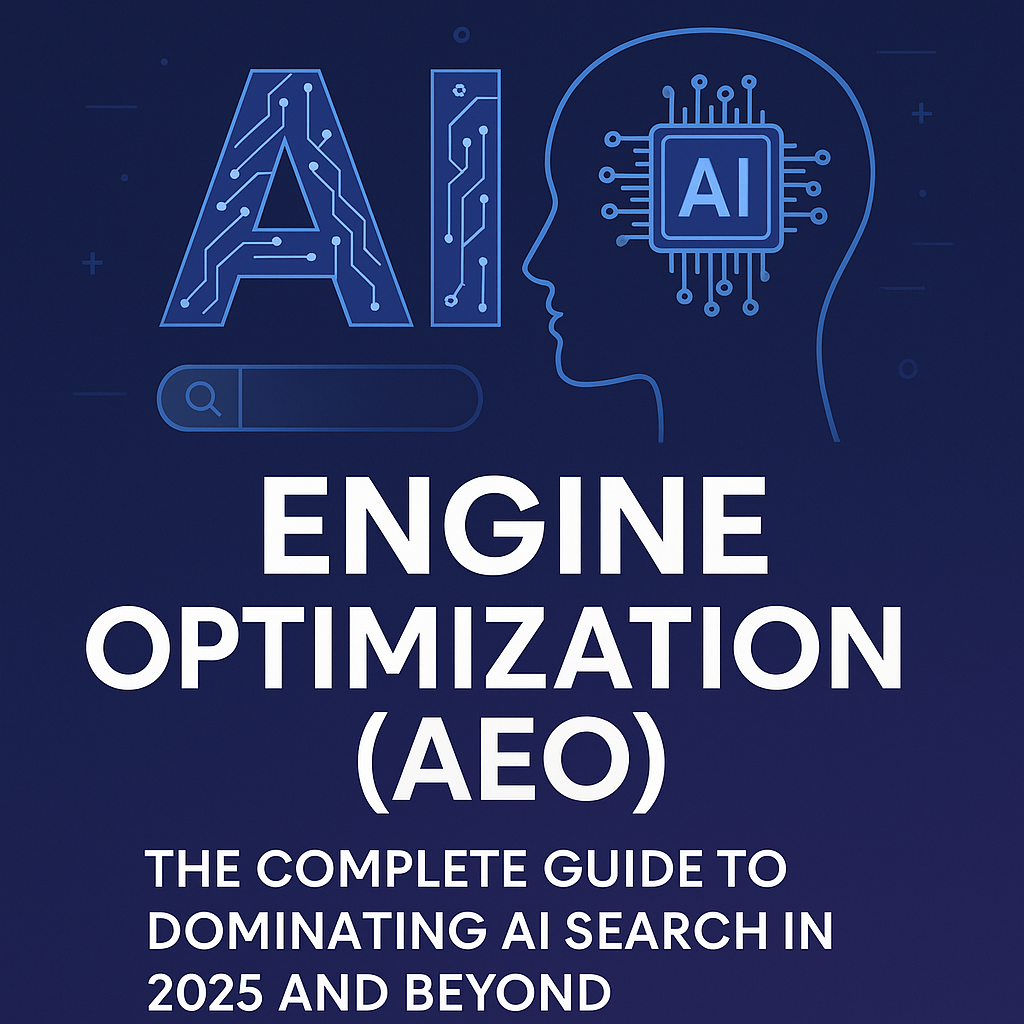
    AI Engine Optimization (AEO): The Complete Guide to Dominating AI Search in 2026 and Beyond

    Yashwant KumarBy Yashwant KumarApril 24, 2018Updated:February 27, 20261 Comment9 Mins Read
    Share Facebook Twitter Pinterest LinkedIn Tumblr Email
    Follow Us
    Google News Flipboard Threads
    ChatGPT Image Dec 10 2025 12 18 28 AM
    Share
    Facebook Twitter LinkedIn Pinterest Email

    [vc_row][vc_column][vc_column_text css=””]

    Search is undergoing the most transformative shift since the invention of Google itself. For decades, digital marketers optimized for traditional search engines with keyword targeting, backlinks, and ranking factors designed around the conventional 10 blue links model. But today, powered by rapid advances in Large Language Models (LLMs), Generative AI systems like ChatGPT Search, Google Gemini Search (SGE), Perplexity, Claude AI, Bing Copilot, and others have radically redefined how people retrieve information.

    Users are no longer satisfied with navigating long lists of links or browsing multiple pages to locate the content they need. Instead, they expect instant, precise, contextual responses, often in conversational format, with automatically summarized insights and credible citations. This shift moves power away from traditional search engines and toward AI-driven answer engines — tools that generate answers rather than merely display indexed pages.

    This new environment demands a fresh optimization approach: AEO — AI Engine Optimization. AEO is not simply an extension of SEO; it is a different paradigm designed to help content become visible and preferred within AI-generated answers, chat-based results, instant reasoning engines, vector search systems, and knowledge graph-powered comprehension models. If SEO were about ranking higher in search results, AEO is about being selected as the source of truth.

    Organizations that ignore this shift risk losing up to 60–80% of search visibility as AI search grows and zero-click queries become normal. But those who embrace AEO early have the chance to capture unprecedented authority and visibility. This article explains AEO in depth, the mechanics behind AI answer generation, optimization strategies, implementation frameworks, technical improvements, and future trends.

    What Exactly Is AEO (AI Engine Optimization)?

    AI Engine Optimization is the strategic process of optimizing website content, knowledge structure, trust signals, and semantic data so that AI search engines and generative answer systems can easily understand, evaluate, and cite your content when responding to queries. Unlike SEO, which focuses primarily on ranking pages for keyword-based search results, AEO focuses on becoming the primary source used by generative AI to build responses.

    Where classical search engines match keywords with indexed pages, AI engines operate fundamentally differently. They attempt to understand meaning and derive contextual relevance rather than relying on keyword density or backlink counts alone. They analyze entities, relationships, semantic clusters, factual accuracy, authority signals, structured knowledge, and trust metrics.

    Therefore, in AEO, the core goal is not to drive traffic from rankings — but to position content as the most credible reference within the dataset that AI models pull from. When users ask conversational questions such as:

    “What is the best CRM for startups in 2026?”
    “Steps to migrate WordPress to headless architecture?”
    “How to repair a 2020 Intel-based MacBook fan issue?”

    AI answers by combining information from multiple sources and presenting the response as structured, coherent insight. The websites that are cited, quoted, or used to power that answer are the real winners — even if they are not visible via traditional rankings.

    Thus, AEO is the future of search, built on:

    • Semantic comprehension instead of keyword matching
    • Entity relationships instead of short phrases
    • Authority validation instead of backlink metrics
    • Content usefulness rather than content quantity

    Why AEO Has Become Critically Important

    The importance of AEO stems from dramatic behavior changes in how users interact with information. The world’s search volume is shifting toward generative answer systems because they are faster, more intuitive, and better aligned with real human communication patterns. Instead of typing short keywords like “best headphones 2026”, users now ask:

    “Which headphones offer the best noise cancellation for frequent travelers, under $200, based on real user reviews?”

    Traditional SEO is not designed for these types of long, natural-language queries. However, AI engines evaluate semantic meaning and intent, reading and synthesizing entire knowledge clusters.

    Additionally, zero-click search has exploded. Most users now find answers without clicking links. With SGE and Perplexity in some categories, website reference clicks have dropped significantly because the engine summarizes all information upfront.

    This creates a new digital battlefield:
    If your website cannot be understood, validated, and trusted by AI engines, it becomes invisible.

    Businesses that adopt AEO can:

    • Gain placement in high-visibility AI answer panels
    • Receive citations from AI models that cite sources
    • Increase brand trust and topical authority
    • Generate authority-driven traffic even without traditional rankings

    Late adopters will see organic traffic decline sharply over the next 12–24 months.

    How AI Search and Generative Answer Engines Actually Work

    To optimize for AI engines, one must know how they function internally.
    Unlike traditional search that indexes pages and ranks them by algorithmic scoring, AI answer engines generally follow a five-stage pipeline:

    1. Understanding User Intent

    The AI first analyzes the query structure, linguistic meaning, and the inferred goal behind it. It classifies intent types (informational, transactional, research, troubleshooting, etc.) and identifies constraints such as price range, time period, or comparison requirements.

    1. Retrieving Relevant Data

    AI engines use RAG (Retrieval Augmented Generation) and vector search technology to locate semantically relevant documents, not just keyword matches. Vector search evaluates conceptual similarity — meaning even if exact words do not match, relevant content is still retrieved.

    1. Ranking and Trust Filtering

    AI models then evaluate which among the retrieved documents are of high quality by checking factors such as expertise, structured clarity, brand authority, semantic coverage, freshness, and factual consistency against external references and knowledge graphs.

    1. Answer Synthesis

    The model merges multiple sources, constructs a coherent answer, formats it logically, and identifies key details such as lists, steps, definitions, statistics, and tables.

    1. Citation and Presentation

    Some AI engines display citations (e.g., Perplexity), while others generate summaries (Google SGE). Regardless, content credibility and structure determine whether a site becomes a referenced source.

    Understanding this pipeline is essential because AEO optimization directly corresponds to improving retrieval, comprehension, ranking, and citation likelihood.

    Major Components of AI Engine Optimization

    AEO is multi-layered and cannot be achieved through simple keyword insertion or traditional blog writing. Instead, it requires upgrading content, structure, authority, and formatting.

    1. Intent-Driven and Deep-Structured Content

    AI engines prioritize content that provides real value, depth, and completeness. Content must thoroughly describe a topic with clear explanations, examples, supporting references, and practical steps. Shallow content written purely to target keywords fails because AI engines ignore generic, redundant text.

    AEO demands transformation of content into expert-level resources that demonstrate strong purpose, well-defined structure, and direct answers. AI extracts information more effectively from articles with clear problem definitions, contextual explanations, and highly specific details.

    1. Entities and Knowledge Graph Optimization

    Entities are named, distinct objects such as people, organizations, products, locations, events, or concepts. AI uses knowledge graphs to understand entity relationships and context. Websites must clearly define and interconnect relevant entities to build topical authority.

    1. Structured Data and Schema Markup

    Structured data is a foundation of AEO because it transforms human-language information into a machine-interpretable format. Schemas help AI engines understand roles, relationships, purposes, and data types. Without structured markup, AI may misinterpret or skip important content.

    1. Topic Clusters and Semantic Coverage

    Instead of isolated articles, AI prefers interconnected content ecosystems built around topic clusters. Clusters improve comprehension by presenting complete knowledge depth rather than scattered segments.

    1. E-E-A-T Enhancement

    AI evaluates expertise credibility by examining identity verification, author credentials, transparency, citations, and brand trust. Websites without proof of expertise are less likely to be cited.

    1. Conversational Search Optimization

    AI queries mimic spoken language. Therefore, content must incorporate natural language questions, long conversational phrases, and FAQs that reflect real-world query phrasing.

    1. Technical and Performance Optimization

    AI engines pick content that loads quickly, is accessible, mobile-optimized, and technically clean. Poor UX reflects poorly on authority and comprehension.

    1. External Trust and Brand Signals

    Real authority now matters more than backlink quantity. PR, citations in reputable publications, social reputation, and brand recognition influence trust-based ranking models.

    AEO Implementation Framework: A Step-by-Step Execution Model

    Step 1: Audit Content for AI Intent and Semantic Depth

    Analyze whether existing content fully addresses user needs, includes practical steps, and answers real user questions. Identify missing content dimensions such as examples, case studies, downloadable templates, or real-world evidence.

    Step 2: Build Topic Clusters and a Pillar-Based Structure

    Design pillar pages that serve as comprehensive resource centers and create multiple interconnected articles covering specific sub-topics. This structure improves semantic indexing.

    Step 3: Add Structured Data and Schema

    Apply schema markup to clarify content meaning. Include Article, FAQ, How-To, Organization, and Person schemas where relevant.

    Step 4: Strengthen E-E-A-T

    Add author bio pages, credentials, research sources, and trust badges. Fix thin content and rewrite from authoritative perspectives.

    Step 5: Optimize for Conversational Query Variants

    Integrate natural question formats and long-tail semantic language. Add FAQ blocks for high-intent queries.

    Step 6: Improve UX, performance, and accessibility

    Optimize for Core Web Vitals, page speed, clarity, layout stability, and mobile design.

    Step 7: Validate Through AI Search Testing

    Test your content inside platforms like Perplexity, ChatGPT Search, Gemini, and Bing to see whether responses cite your content.

    The Future of AEO

    The future of digital discovery will be conversational, AI-first, semantically indexed, and trust-driven. In the coming years:

    • Vector search will replace text-based indexing
    • AI search will integrate real-time verification
    • Websites will act as data sources instead of navigation targets
    • Structured and verified factual content will dominate
    • AI agents will perform autonomous research on behalf of users

    This shift has already begun. The winners will be the brands that proactively optimize for machine understanding rather than only human reading.

    Conclusion

    AI Engine Optimization is the next evolution of search and digital visibility. AEO requires transformation from keyword-based content to expert, structured, machine-interpretable knowledge ecosystems. Businesses that adopt AEO early will earn placement as authoritative sources within generative search results and conversational platforms. Those who delay risk becoming invisible as AI changes the future of search forever.[/vc_column_text][/vc_column][/vc_row]

    AEO AEO Trends
    Share. Facebook Twitter Pinterest LinkedIn Tumblr Email
    Yashwant Kumar

    Related Posts

    Why Digital Marketing Fails Without Systems Thinking

    February 2, 2026

    Lifecycle Marketing: Turning One-Time Visitors Into Long-Term Revenue

    February 2, 2026

    Marketing Automation: What to Automate and What Not To

    February 2, 2026

    1 Comment

    1. A WordPress Commenter on October 17, 2018 1:08 am

      Hi, this is a comment.
      To get started with moderating, editing, and deleting comments, please visit the Comments screen in the dashboard.
      Commenter avatars come from Gravatar.

    Don't Miss

    Personal Branding Without the Cringe: Building Professional Credibility That Actually Works

    yashwant160@gmail.comFebruary 6, 2026

    Personal branding has a reputation problem. Too often, it’s confused with self-promotion, performative posting, or…

    Career Resilience: How to Build a Job That Survives Layoffs, AI, and Market Shifts

    February 6, 2026

    From Individual Contributor to Leader: The Career Shift Most People Get Wrong

    February 6, 2026

    The Non-Linear Career: Why the Best Careers No Longer Follow a Straight Path

    February 6, 2026
    Stay In Touch
    • Facebook
    • Twitter
    • Pinterest
    • Instagram
    • YouTube
    • Vimeo

    Subscribe to Updates

    Get the latest creative news from SmartMag about art & design.

    About Us

    Results-driven digital professional with 15+ years of experience across Web Operations, Enterprise SEO, and large-scale digital platforms. I specialize in building, scaling, and optimizing complex websites where performance, search visibility, and operational reliability must work together—not in silos. My work sits at the intersection of strategy and execution, translating business goals into systems that teams can actually run.

    Facebook X (Twitter) Pinterest YouTube
    Our Picks

    Personal Branding Without the Cringe: Building Professional Credibility That Actually Works

    February 6, 2026

    Career Resilience: How to Build a Job That Survives Layoffs, AI, and Market Shifts

    February 6, 2026

    From Individual Contributor to Leader: The Career Shift Most People Get Wrong

    February 6, 2026
    Most Popular

    Top 15 popular link building methods you should consider before it’s too late

    March 24, 20180 Views

    Quality Score Demystified: What Actually Improves SEM Performance

    January 31, 20260 Views

    How SEO, SEM, Email, and Paid Social Should Work Together

    February 2, 20260 Views
    © 2026 All rights reserved. Y. K. Thakur.
    • Home
    • Technical SEO
    • World
    • Lifestyle
    • Buy Now

    Type above and press Enter to search. Press Esc to cancel.